 A John Deere Publication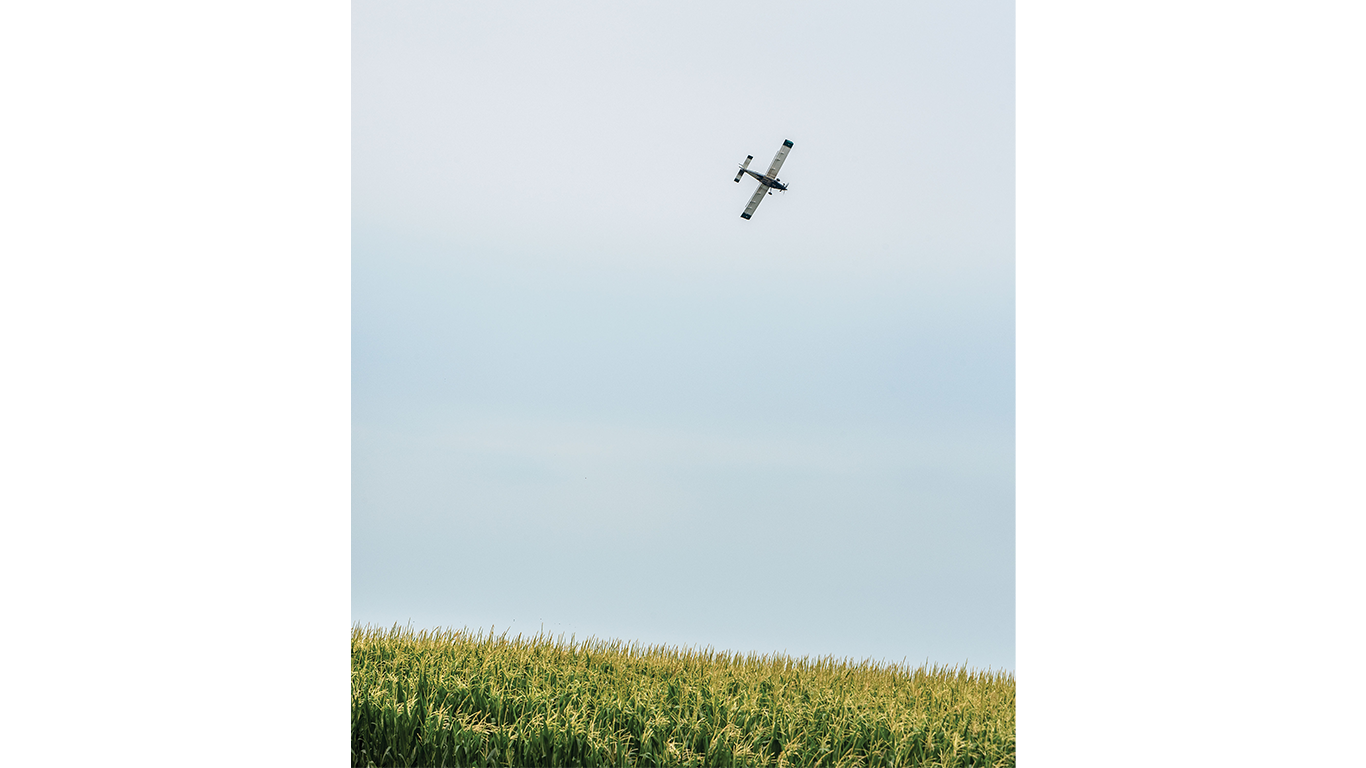
According to the National Agricultural Aviation Association, aerial applicators treat 127 million acres of U.S. cropland annually.
Agriculture, Education September 01, 2026
Going Above and Beyond
Someone has to fly the plane.
Story and Photos by Katie Knapp
A yellow plane banks low over the Marshall County, Ill., airport and sets down without a wobble. The ground crew is already moving. Then the pilot climbs out— athletic shorts, t-shirt, aviation helmet—and heads straight for the field maps without breaking stride. His name is Joey Strickland. He's from Georgia. That's all the introduction he gets. No time for lollygagging; there's corn waiting.
July is go time for Chuck Holzwarth and his crew. He's been running aerial application operations across Illinois and Iowa for more than 30 years. "The month of July, we'll have up to 30 airplanes going," he says. He owns 12 planes and one helicopter. The rest come from contractors who follow the season north.
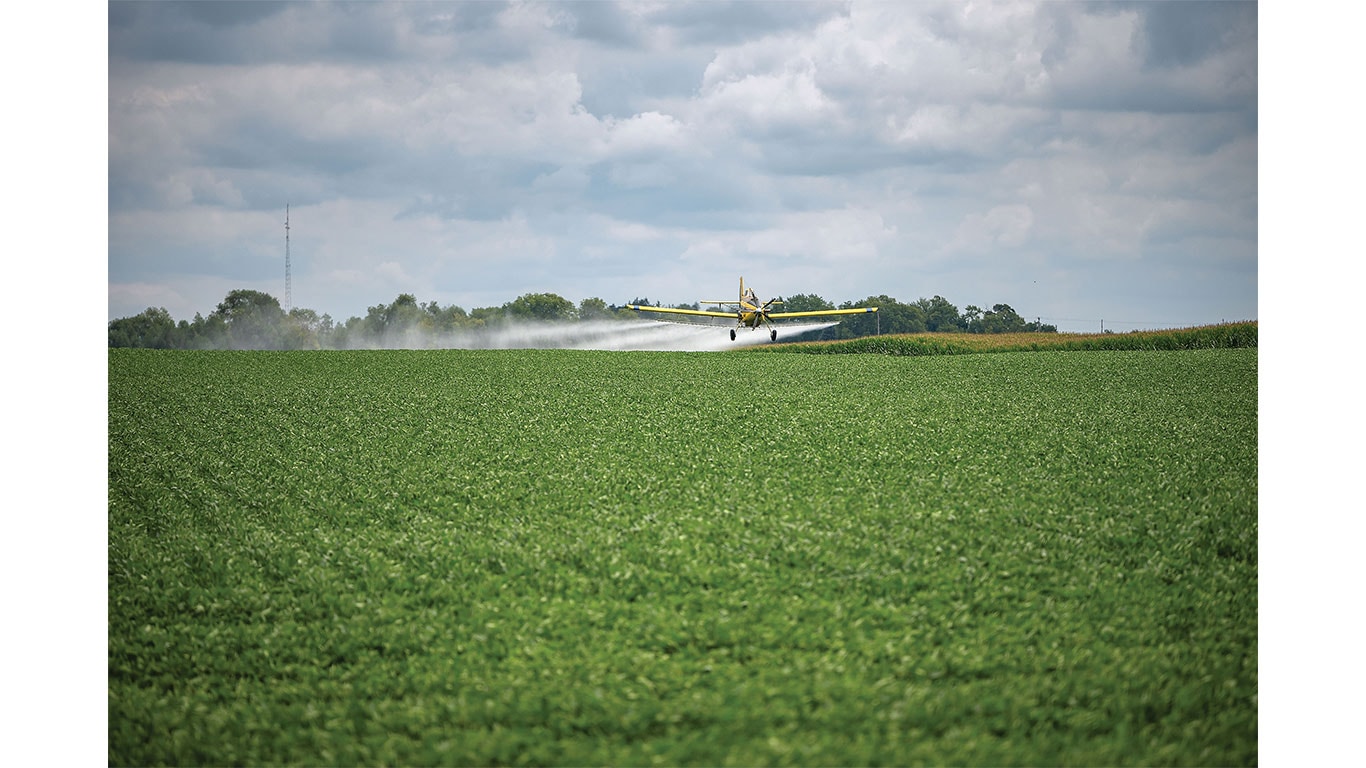
Timing is everything. When disease pressure builds in a standing corn crop, a ground rig often can't get there—the soil too wet, the canopy too thick. But in a single 12-hour day, one plane can cover 3,500 to 4,000 acres.
It's not just faster and less invasive to the field; it is more effective. The agronomist who hired Holzwarth to fly her farmer's ground sees these advantages in real-time.
"Since diseases like tar spot have increased fungicide demand in our area in the last decade, aerial application allows us to cover more acres with the added benefit of improved canopy penetration," says Montana Knoblauch with Sun Ag Inc.
Kansas State and the University of Illinois researchers found an 18.6 bushel-per-acre advantage from aerially-applied fungicide in corn.
The physics help explain why planes do better this time of year.
Holzwarth says, "Fly 10 to 15 feet above the canopy at 170 miles per hour and the downdraft from a 20,000-pound aircraft pushes the spray deep into the crop, deeper than a sprayer can do from the ground."
While the groundcrew fills his tanks, Strickland stretches his legs and studies the field maps. His plan for the next 400-acre flight is deliberate—spray the biggest fields first. A full load is 800 gallons. Starting on a wide-open, square 80 before moving to smaller, odd-shaped fields means he will be able to dodge the powerlines and hedge rows more easily with a lighter load.
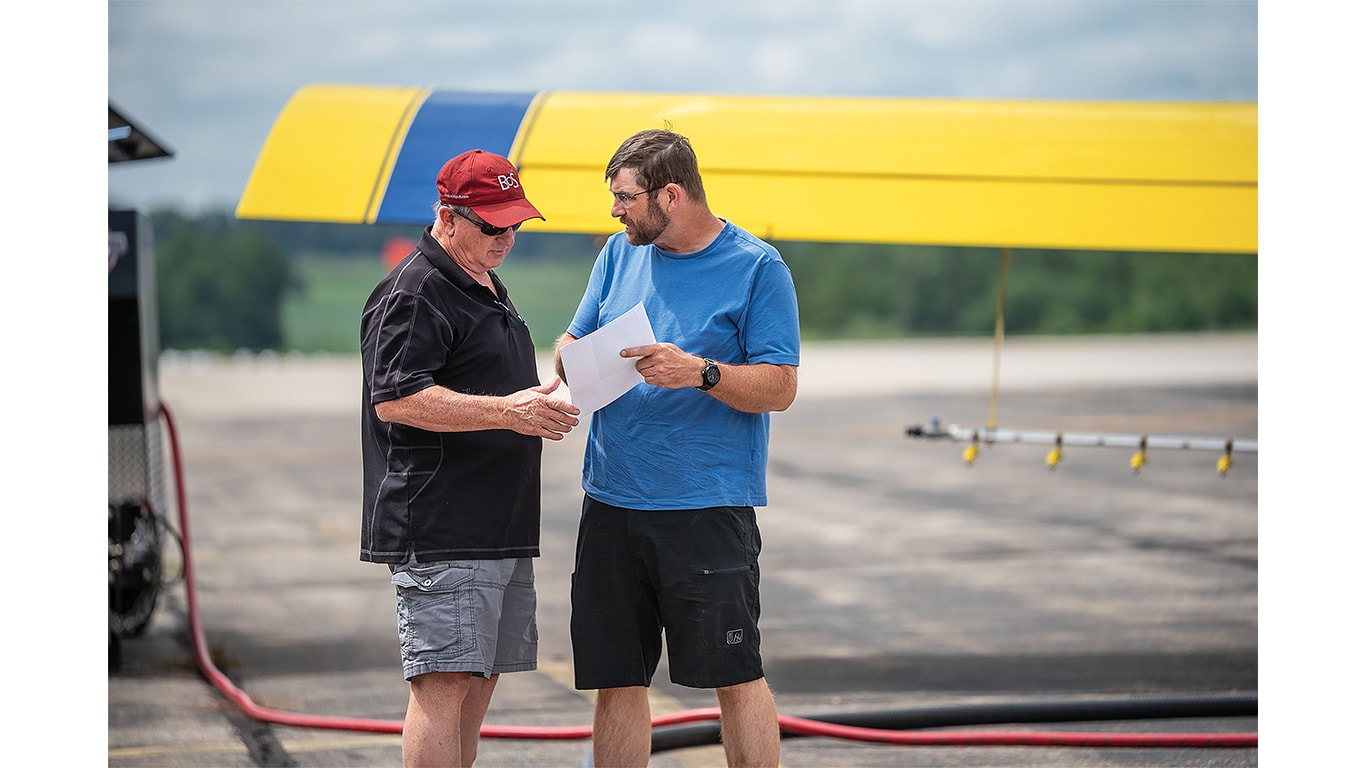
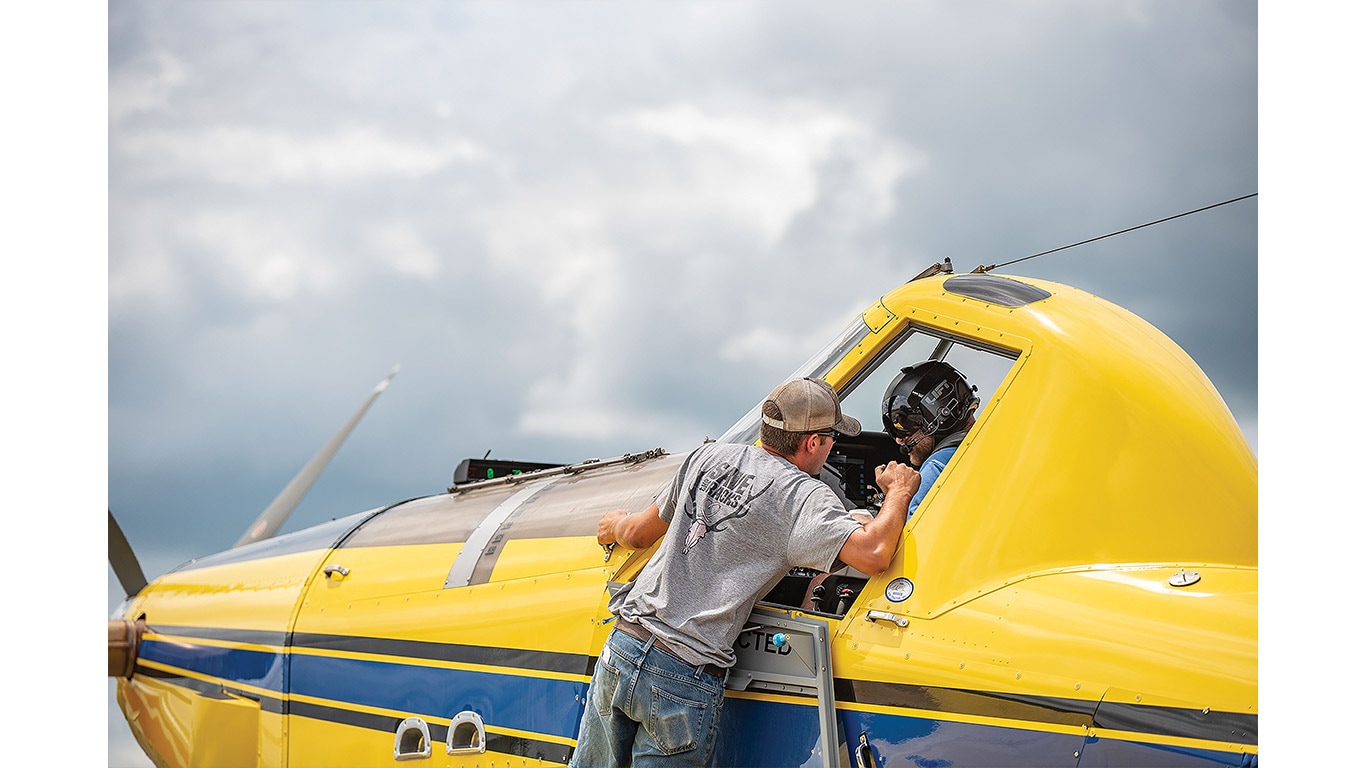
Above. Chuck Holzwarth and Joey Strickland review field maps. After fueling and loading fungicide in less than 10 minutes, crewman Austin Burris gives the plane a final once-over before Strickland's next flight.
Getting someone like Strickland in the cockpit takes years, Holzwarth explains. Insurance won't cover a high-value aircraft—some pushing $2 million—until a pilot has 1,000 hours. So Holzwarth bought a Cessna trainer and pays for the fuel to build those hours, all while hoping the trainees stick around after.
"I spend three years, all that money, and some just fly one year for me." Skilled labor is just as hard to find in this corner of the ag industry as it is the rest.
There are only about 3,400 ag pilots in the U.S. The average hired pilot has nearly 20 years in the industry. The ones who last tend to share farmers' tolerance for long days, tight timelines, and conditions that don't cooperate.
Ask Holzwarth if they're all adrenaline junkies, and he pauses. "Flying these planes is a lot of fun. But when you have to fly every day that weather permits in season, it has its challenges."
While Austin Burris cleans the windshield (bugs collect fast at 170 miles per hour) and tops off the fuel tank, Holzwarth makes an important safety point.
He says curiosity gets the best of people when they see these planes whiz over a field and loop into their next pass. "People pull over. Sometimes they bring out their kids or even launch a drone. I get it, but I wish they would stay back a little farther."
And just like that Strickland's 10-minute break is up. He climbs back in the cockpit, pulls on his helmet, and launches out over the next corn field. Thousands of acres are still waiting. ‡
More articles related to:
Read More of The Furrow
LIVESTOCK/POULTRY, AGRICULTURE
On the Wings of Love
Argentine farmers turn their dream into a reality.
AGRICULTURE, SPECIALTY/NICHE
A Dish Fit for Obelix
Madelinot couple carves out a niche with wild boar.