 A John Deere Publication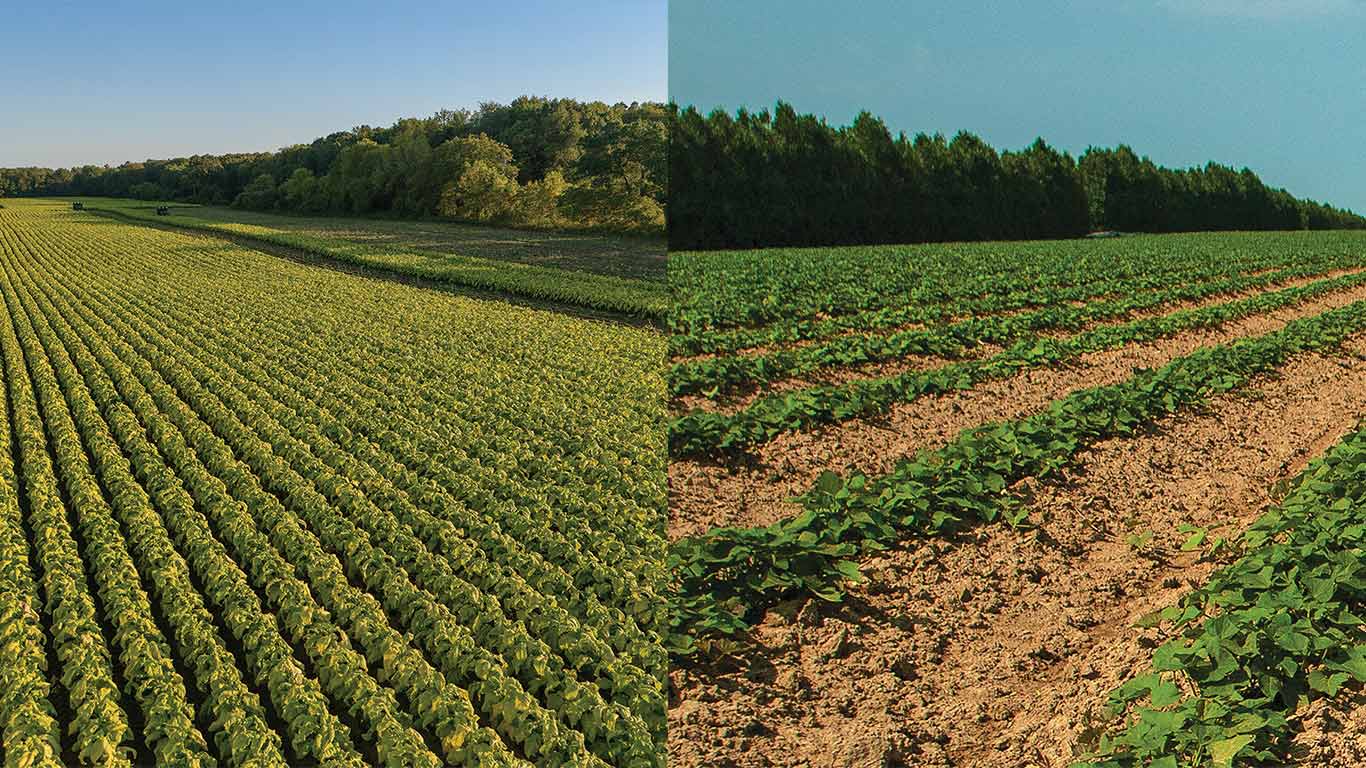
As tobacco demand fell, many tobacco growers pivoted to other high-value crops.
Agriculture, Education February 01, 2026
Changing Landscapes
Economic pressures have created a new rural landscape in Canada.
Story and Photos by Lorne McClinton
What's changed in farm country since younger baby boomers or older Gen Xers first heard radio stations playing Queen's "Bohemian Rhapsody" in 1976? Just about everything. The differences in landscape alone are dramatic.
On the Canadian prairies in 1976, for example, roughly every third field was summerfallow, land intentionally left unseeded to control weeds and retain soil moisture. Two-thirds of fields in crops would have been planted to wheat. The rest were largely seeded to either barley, oats, or flax. Only 2% of prairie fields were summerfallowed in 2025.
Farm consolidation has been relentless across rural Canada. Saskatchewan's farm total dropped from 70,958 in 1976 to 34,128 in 2021. The average size grew from 923 to 1,766 acres.
The differences don't stop there. Wooden grain elevators have almost vanished, replaced by inland terminals. In some regions small towns have emptied out. But in others, farmland faces pressure from urban sprawl. The Ontario Federation of Agriculture reports the province loses 319 acres a day to development.
Prairie vistas are now a kaleidoscope of color stretching from horizon to horizon. There are still lots of cereal crops like wheat to be found, but now the July landscape is filled with fields of brilliant yellow canola and all manner of pulse crops like lentils, field peas, and chickpeas.
Canola went from being a marginal crop to becoming ubiquitous across the prairies once GMO varieties were introduced in the mid1990s. Saskatchewan has become the largest exporter of lentils and chickpeas in the world, creating a new multi-billion dollar industry in the process.
Tougher economic conditions will often push people to try something new, says Carl Potts with the Saskatchewan Pulse Growers in Saskatoon, Sask. So, when farmers heard others were getting good returns from lentils it had a snowball effect.
Corn (for grain and silage), soybeans, and winter wheat are now the most widely grown field crops in Ontario. Soybeans have been grown in the far southwest of Ontario since the 19th century. The 1976 census was the first to show that newly developed varieties of soybeans and corn allowed them to be grown in Eastern Ontario and Quebec.
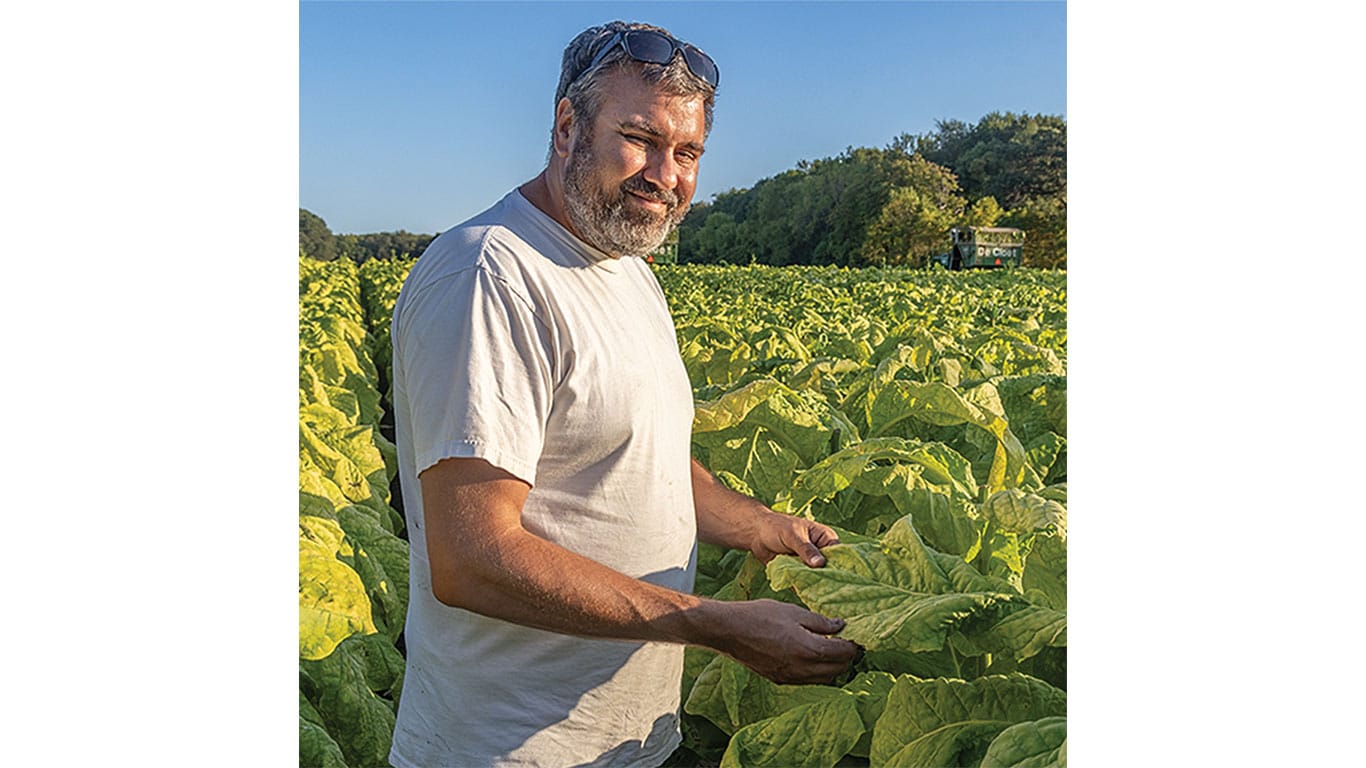
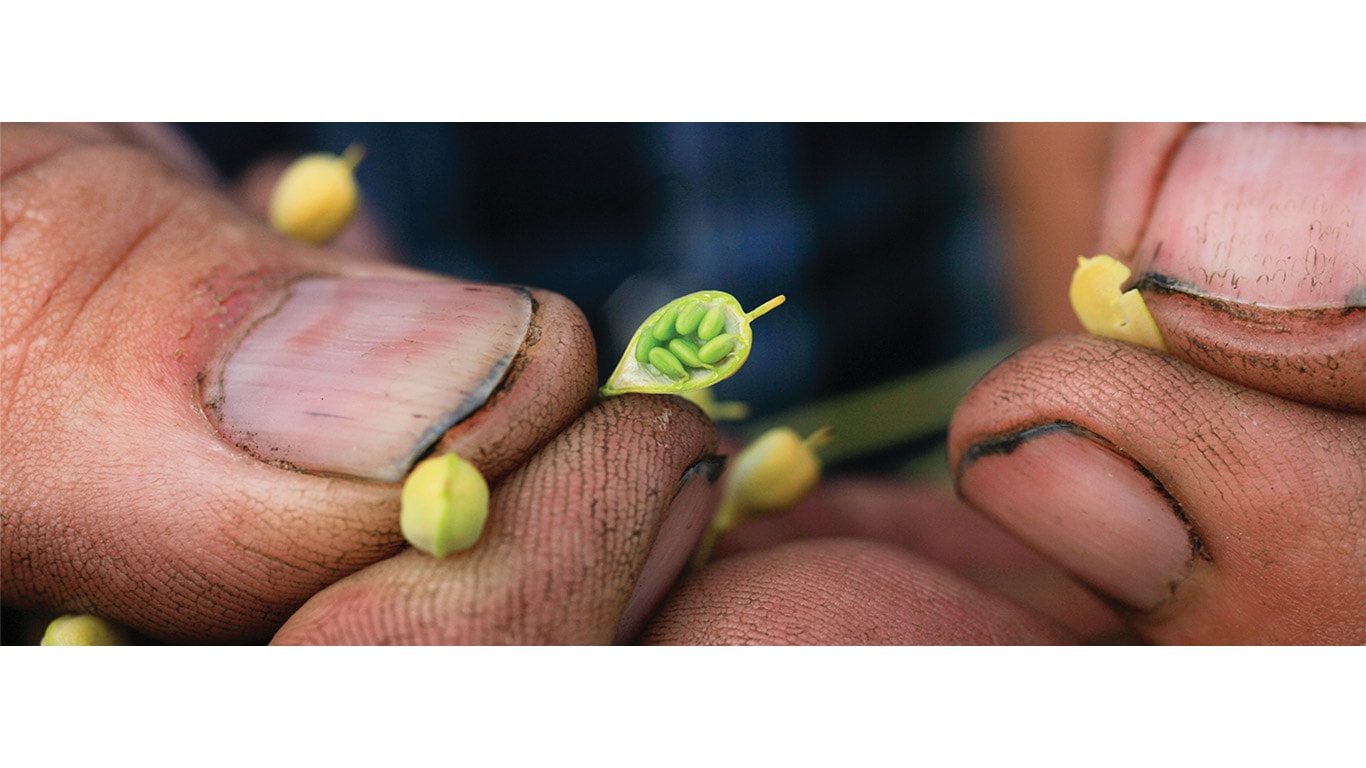
Above. Anthony Decarolis says tobacco is again one of the most profitable crops grown in Ontario. Prairie farmers have diversified their crop rotations. They are now growing everything from pulse crops like lentils, to oilseeds like canola and camelina.
Nowhere changed more than Norfolk and Essex Counties, the heart of Canada's tobacco belt in the southwest of Ontario. In its heyday, during the 1960s and 1970s, tobacco farmers were growing more than 200 million pounds of leaf under a provincially-administered quota system. The high-value crop underpinned the region's economy.
"Tobacco was a very lucrative crop for decades, then people quit smoking and demand collapsed," says Anthony DeCarolis, a tobacco grower from Simcoe, Ont. " We went from producing over 200 million pounds in the late 1970s to 45 million pounds today. The number of tobacco growers dropped from over 2,000 in the late 1990s to just 130 of us now. But those of us left maximized our efficiency," he says. "Demand has stabilized and I'd say tobacco is now, acre for acre, again one of the most profitable crops being grown in Southern Ontario. Most production goes to the Far East," he adds.
Many other former tobacco growers pivoted to new lucrative crops turning Norfolk County into Ontario's Garden. Almost every crop that's grown in Canada can be found there. Ginseng, grapes, pumpkins, strawberries, sweet potatoes, and most horticulture crops are grown within a few miles of DeCarolis's farm.
Economic pressure is driving it all. But farmers keep adapting while the countryside keeps changing right before our eyes. ‡
More articles related to:
Read More of The Furrow

AGRICULTURE, AG TECH
A Future in Gene Editing
Amending the DNA of success.
AGRICULTURE, EDUCATION
A Roller Coaster Ride
Fifty years of ups and downs in the Canadian farm commodity market.