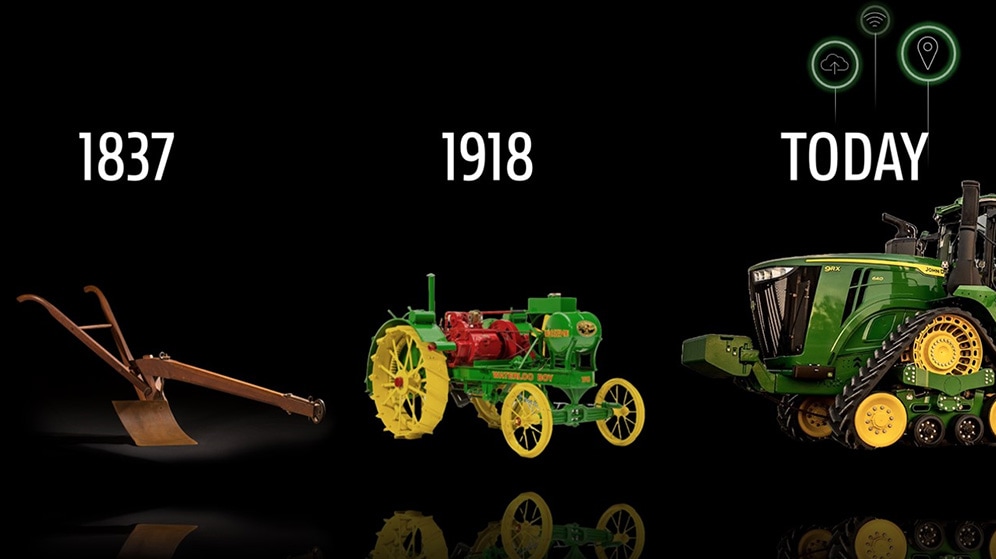
How John Deere Tractors Evolved with Our Customers
Every shift in farming brings new demands for equipment. More power. Longer days. Less labor. Greater precision.
For more than a century, John Deere tractors have evolved alongside those demands. And as America marks 250 years, that evolution highlights a deeper story of U.S. innovation and manufacturing rooted in Waterloo, Iowa.
Built for Power, Built for Trust
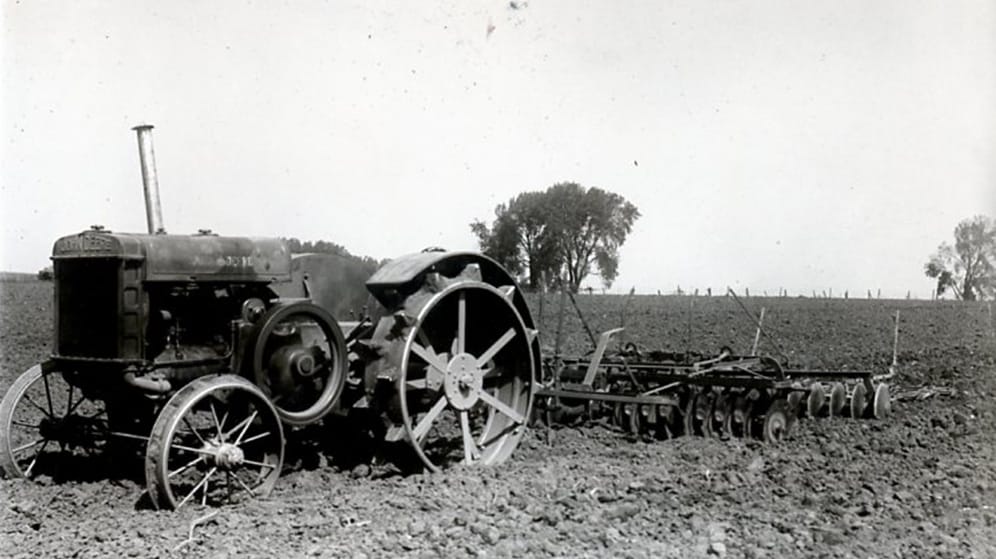
The earliest chapters of Deere’s tractor story were shaped by a simple customer need: reliable power. In the early 20th century, farmers began to move away from horses and steam engines, looking for machines that could handle more work with less labor.
That shift took a major step forward in 1918, when Deere acquired the Waterloo Gasoline Engine Company, formally entering tractor manufacturing and anchoring its future in Waterloo. Early tractors like the Model D became known for durability and dependability—qualities farmers depended on during long days and narrow plowing and planting windows.
“From the beginning, Deere tractors were designed from customer feedback,” said Neil Dahlstrom, John Deere historian. “They were shaped by what farmers were asking for—more power, more reliability, and equipment they could count on when it mattered most.”
As farms expanded after World War II, customer needs continued to evolve. The introduction of Deere’s first diesel tractor reflected growing demand for stronger, more efficient machines capable of supporting larger operations and heavier workloads.
Designing Around the Operator
By the 1960s and 1970s, another shift was underway. Farmers weren’t just asking for more power—they were spending more hours in the cab and needed tractors that were easier to operate, safer, and more comfortable.
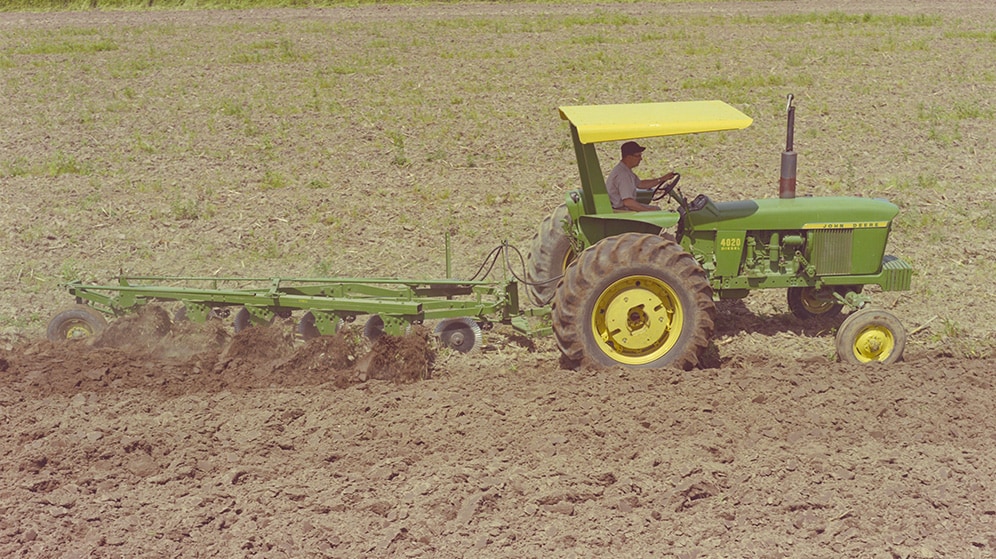
That shift came into sharp focus in 1964 with the introduction of the Model 4020 tractor. At the heart of its success was the PowerShift™ transmission, which changed how farmers interacted with their machines by making operation simpler, smoother, and less physically demanding during long days in the field. Rather than working around the tractor, operators could stay focused on the job at hand—adjusting speed and performance as conditions changed, without breaking their rhythm.
“This was the era when we really started designing tractors around the operator,” said Matt Olson, group product marketing manager. “Customers told us they needed better visibility, easier controls, and less fatigue at the end of the day. Those insights drove major changes in how tractors were built.”
Precision Changes Everything
As farming entered the digital age, customer challenges shifted again. Managing more acres with fewer inputs meant decisions needed to be smarter, faster, and more precise.
The introduction of precision agriculture technologies transformed how tractors supported customers in the field. Tractors became platforms for decision making, helping farmers reduce overlap, manage inputs, and operate with greater consistency as conditions changed throughout the day.
“Every technology step started with a customer challenge,” said Chad Plathe, global product manager for heavy draft tractors. “Whether it was labor availability, efficiency, or consistency across the field, the technology followed the need.”
That customer driven progression continues today. In 2026, Deere launched a redesigned 8 Series tractor offering up to 540 horsepower and featuring Active Command Steering™—a system that automatically returns the steering wheel to center, reducing effort and improving maneuverability during long hours in the field. The result is a machine that helps operators stay precise and comfortable, even as workloads grow and windows for fieldwork tighten.
Built in Waterloo, For the Long Term
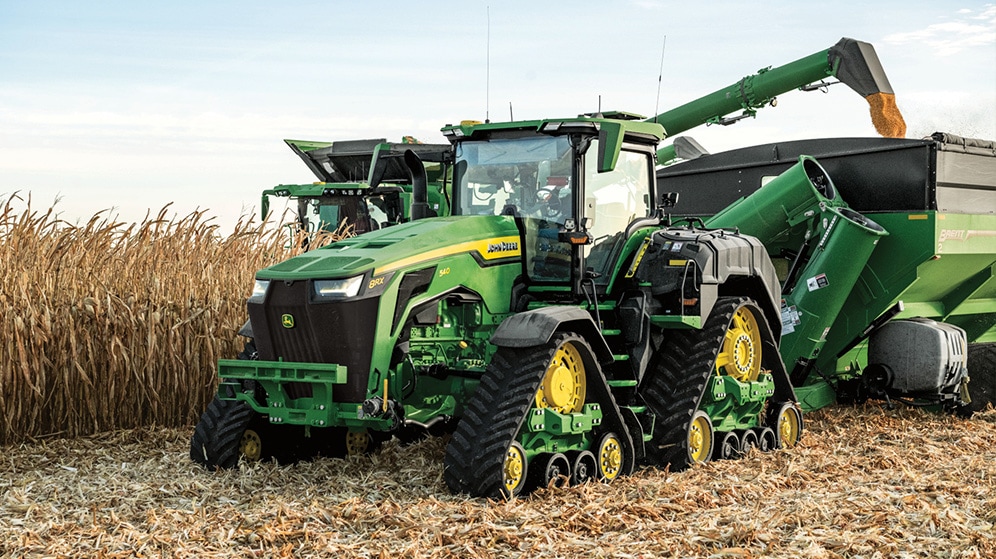
While the technology has evolved, one thing has remained constant: the role of Waterloo, Iowa in bringing these ideas to life.
For decades, Waterloo Works has been central to tractor manufacturing, turning customer feedback into real-world solutions that end up in fields across the country and around the world.
“Waterloo isn’t just where tractors are built,” Tom Johnson, vice president and factory manager at Waterloo Works. “It’s where generations of employees have helped translate customer needs into machines farmers can rely on season after season.”
From iron machines built to replace horses to intelligent tractors designed to work autonomously, the evolution of the John Deere tractor mirrors the evolution of American agriculture itself. And as the nation marks 250 years, the focus remains the same as it was a century ago: listen to customers, build with purpose, and support the people who feed, fuel, and build the country.