 A John Deere Publication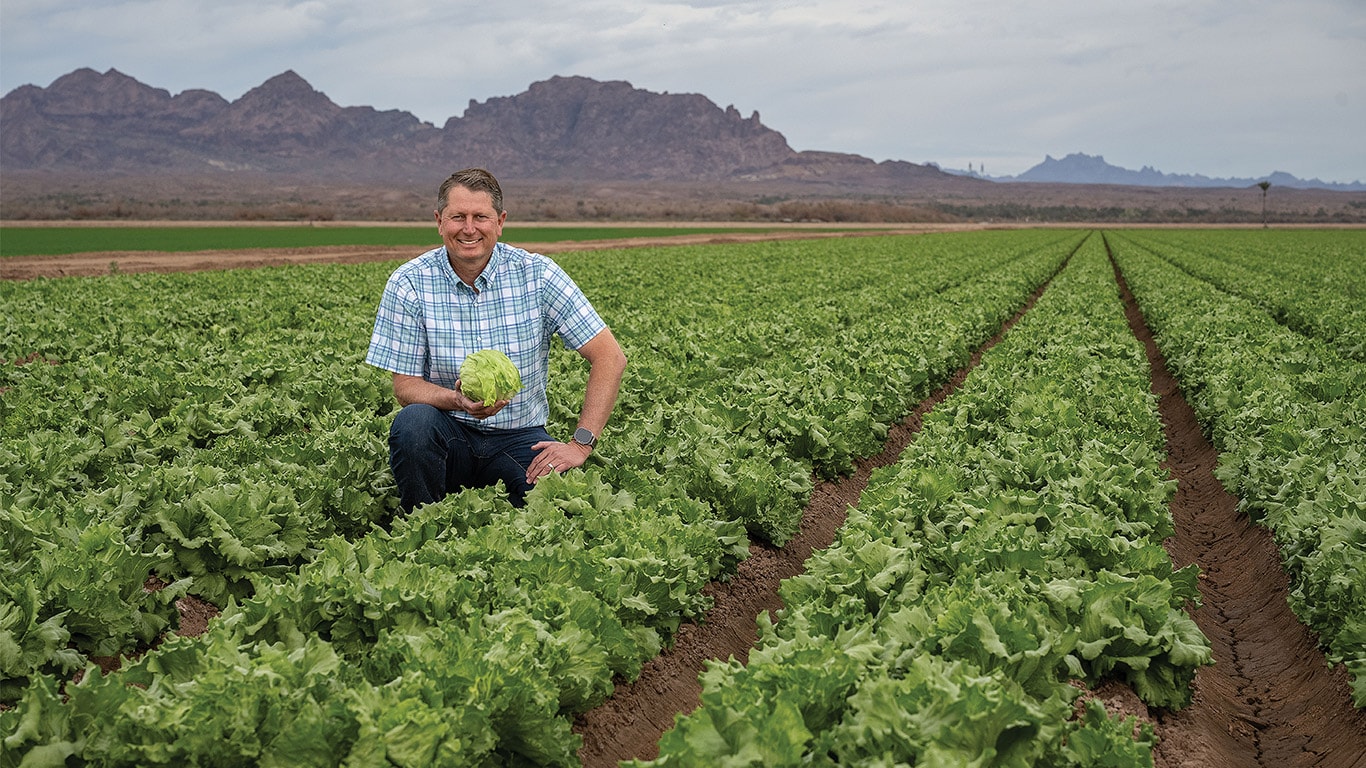
John Boelts and his Desert Premium Farms partners grow 3,000 acres of produce in Yuma Valley. It's a constant production cycle with leafy greens dominating winter; grains and cotton in summer; and melons in spring and fall.
Agriculture, Education September 01, 2026
Fresh From Yuma!
The winter salad bowl delivers greens Thanksgiving through Easter.
Story and Photos by Martha Mintz
Yuma is the heart of U.S. winter vegetable production, pumping a rhythmically reliable flow of fresh, leafy greens from field to table.
"The farmers here feed 90-plus percent of North America from November through April on just 180,000 acres of production," says Tanya Hodges, executive director of Yuma Center of Excellence for Desert Agriculture.
Farmers here grow a remarkable 170 unique crops including spinach, leaf lettuce, head lettuces, cilantro, broccoli, cauliflower, celery, melons, and so many more. They're also responsible for raising high-value produce seed.
"Due to the stability of the winter weather, there are 10 varieties of hybrid onion seed that are only produced here," says John Boelts, Yuma grower and Arizona Farm Bureau president. Onion, broccoli, cauliflower, and other produce seed are some of the most expensive and highest margin crops grown in the valley, but make up just 10% of the acres.
Whether growing seed or food, production in this desert valley relies on two critical arterial flows: the water from the Colorado River, and the remarkable labor force that streams into the valley each day.
"Fifteen thousand farm workers cross the border from Mexico every morning in a 3-hour span," Boelts says. They start queuing up at 2 a.m. to walk or drive across the border. The line of cars stretches for miles. "There are roughly 50,000 people in the valley each day tending to vegetable, seed, date, and citrus crops."
The sheer amount of manpower necessitates one of the largest privately owned mass transit systems in the country. Crew buses and vans transport workers to the fields to move irrigation pipe, thin and weed crops, and harvest.
Also on the move is a fleet of 3,000 semis pumping vegetables from field to cooler before distributing the bounty to the nation.
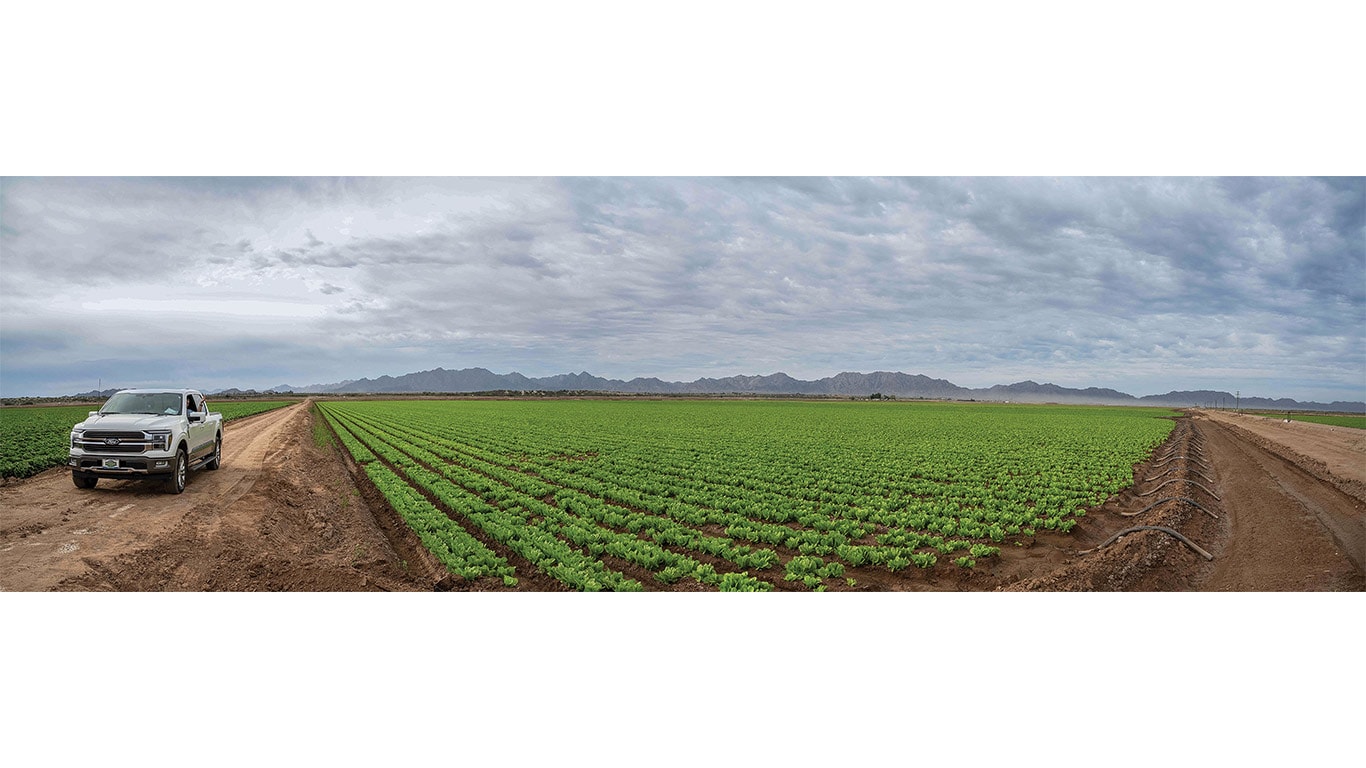
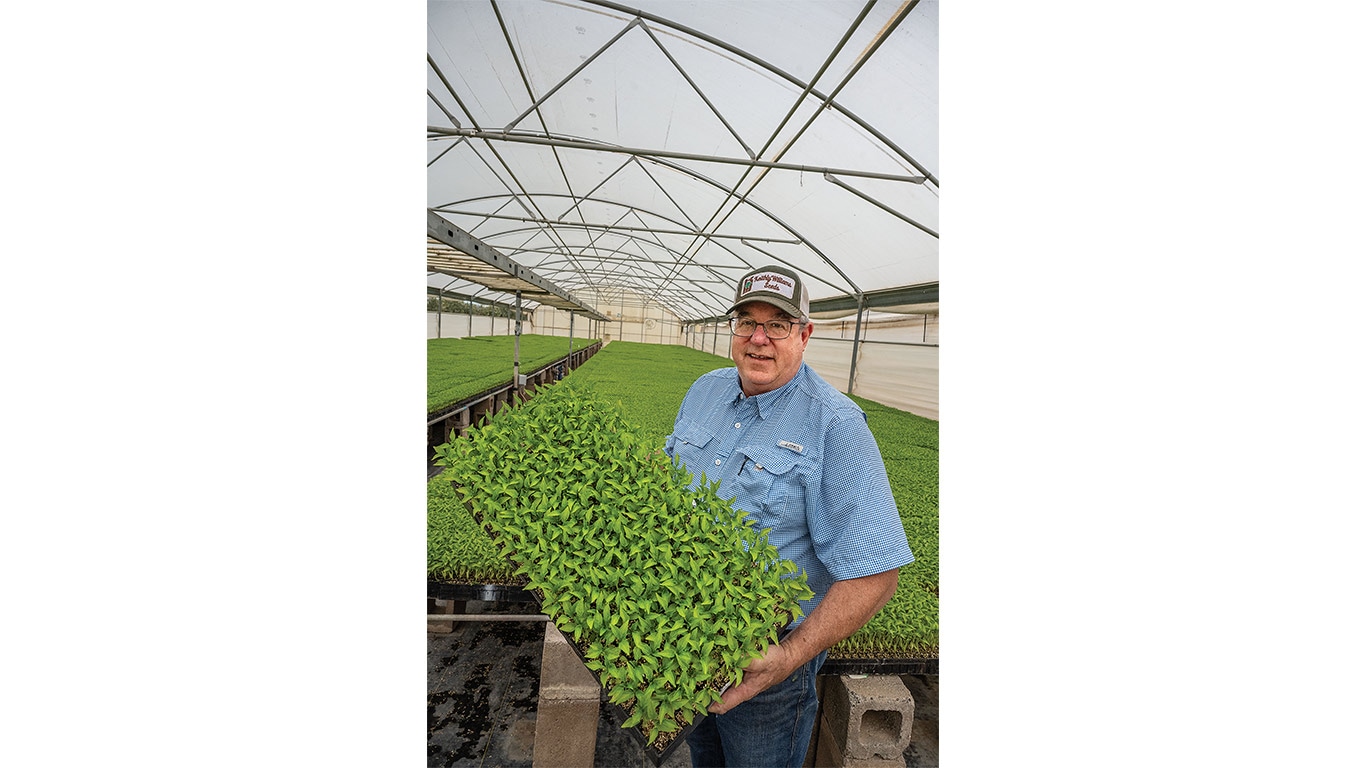
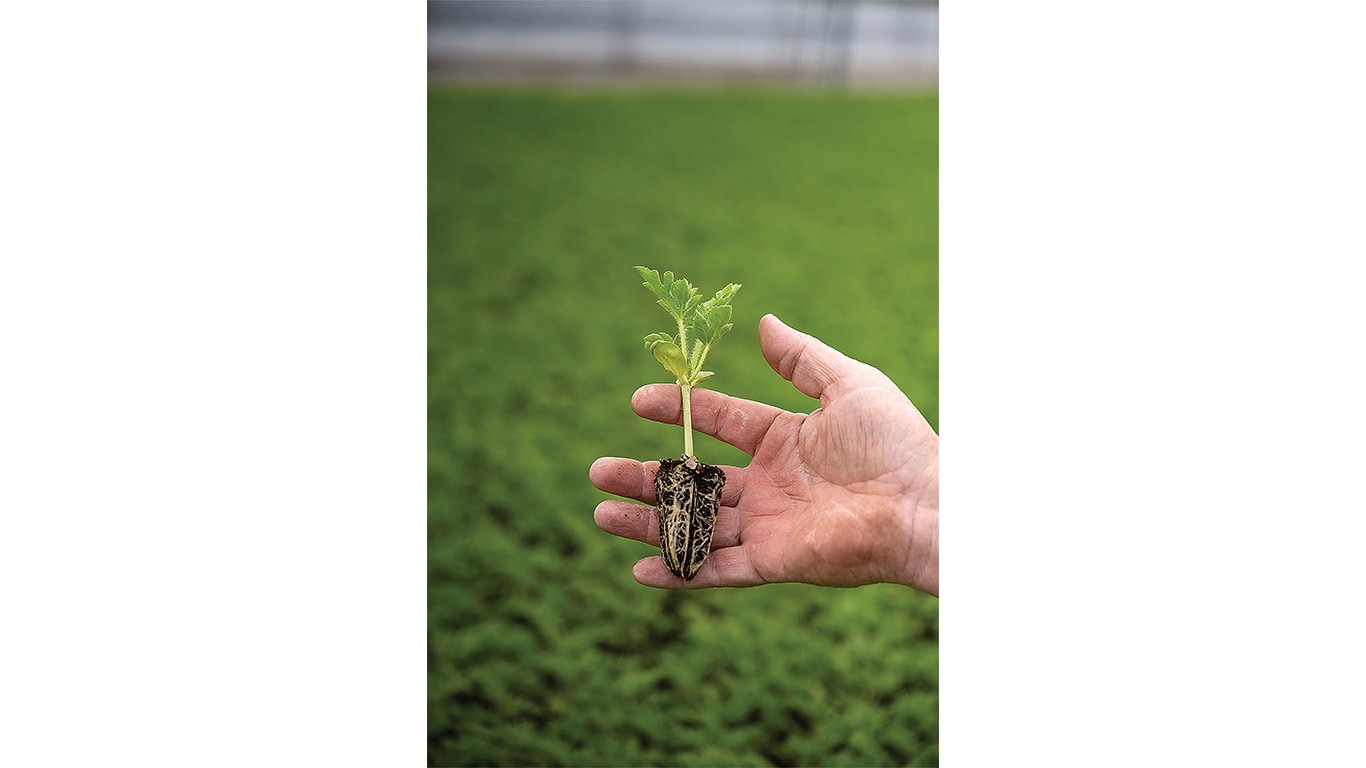
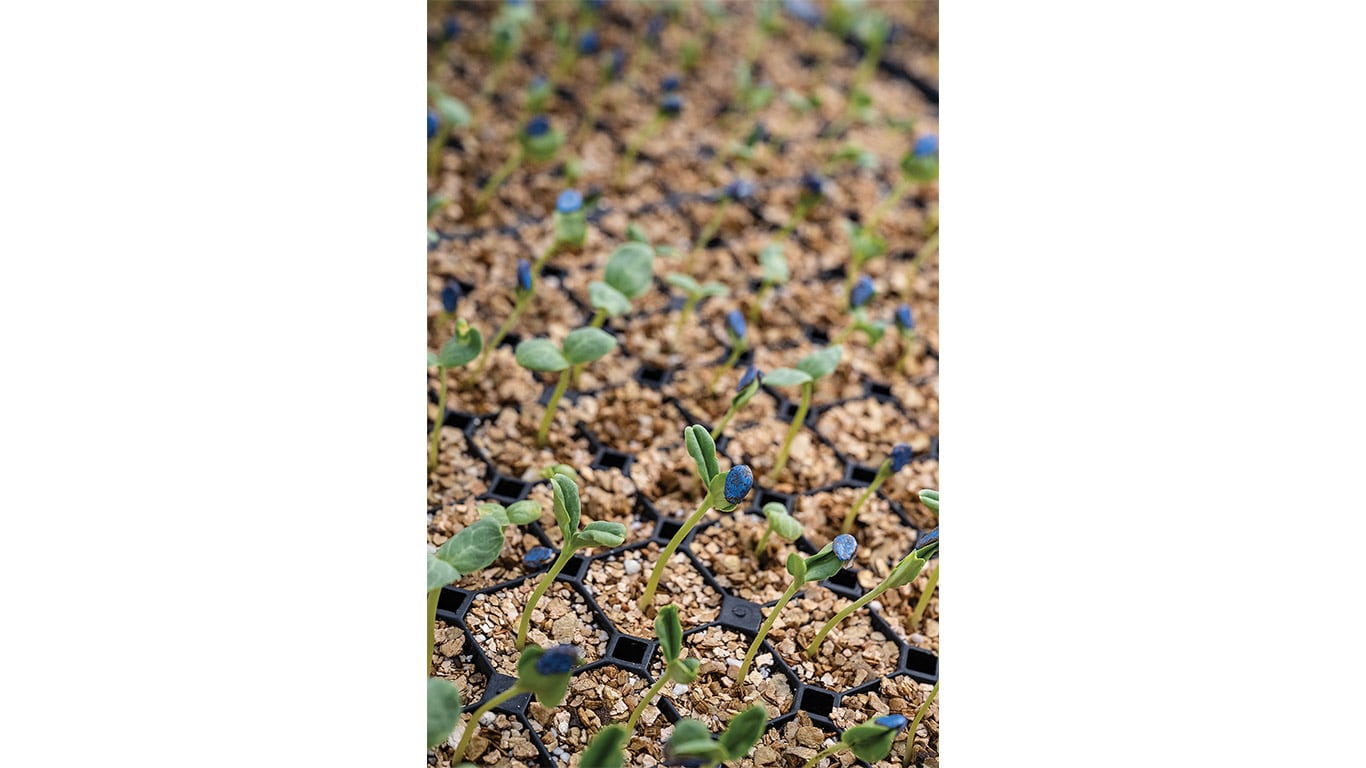
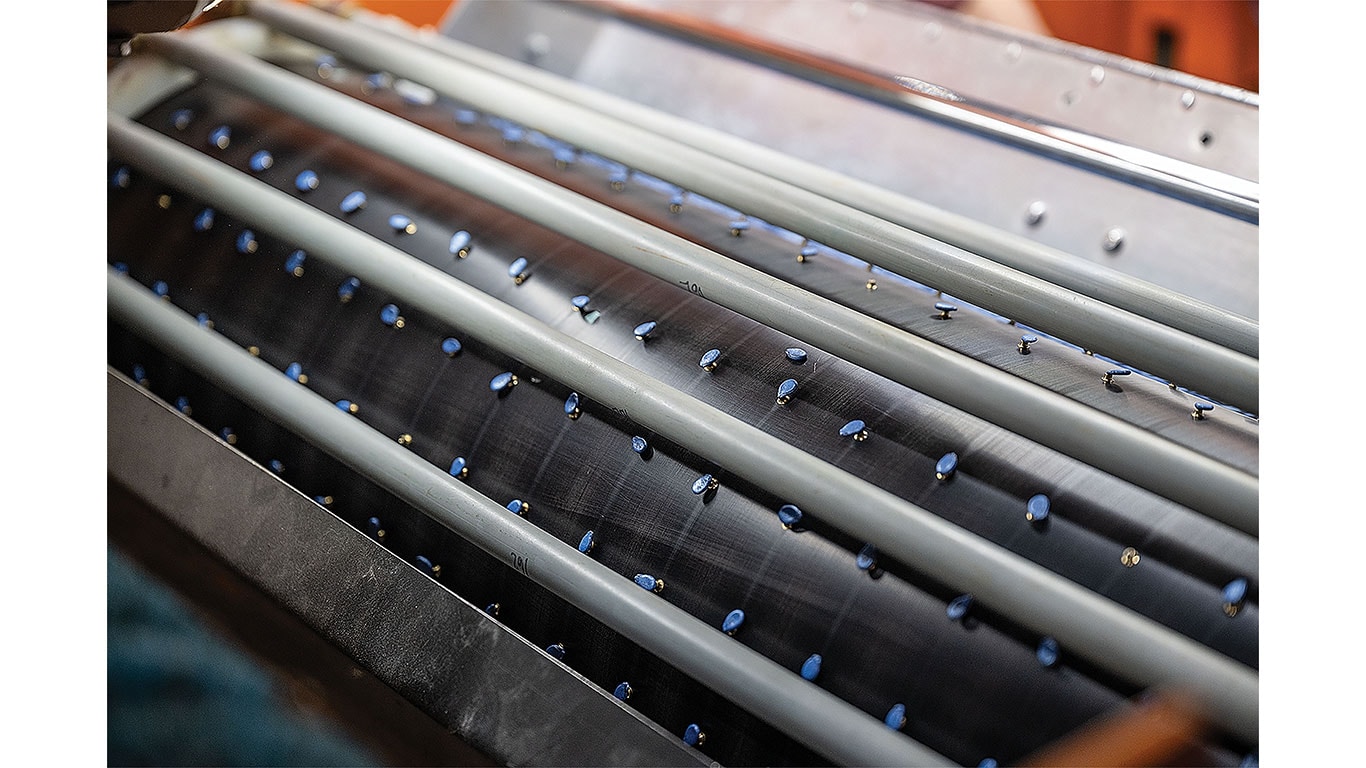
Above. While perfection is the goal, untimely October rains created some variability for some of the 2025-2026 crop. Sean Foy manages Yuma's Keithly-Williams Nursery Division. They grow 300 million transplants per year in 111 greenhouses. In February, greenhouses are full of watermelon and pepper starts for growers across the country.
Farming chaos. Another reliable flow is the unending phone calls and text messages Yuma farmers field each day. While navigating the checkerboard of his fields, Jesus Tovar, president of T&P Farms Inc. in Somerton, Arizona, is contacted no less than 20 times in the span of two hours.
He and other farmers I rode along with spoke with ditch riders, journalists, irrigation crews, harvesters, tour groups, partners, lawyers, and even managed a rare misunderstanding between a crew member and border patrol. Tovar estimates he juggles around 60 calls in the course of a day.
Farming in Yuma is a complicated task with many, many working parts. Farmers here by and large rent the acres they farm. It is not uncommon to lease a field for vegetable and melon production only to turn the acres over to another farmer, or the landowner, to raise the rotational summer crops of wheat, sorghum, or cotton.
Most are custom growers. They manage fields, plant and tend the crops, and then labor contractors facilitate harvest for shippers.
For the 3,000 acres of vegetable, melon, and rotation crops Boelts grows with his partners in Desert Premium Farms, they employ around 50 people.
"We don't swing a single knife. Our labor is used for driving tractors, prepping land, planting, and doing sprinkler work," Boelts says.
Irrigation is far more dynamic than in other systems.
"Each stitch of sprinkler pipe is in a field between 7 and 9 times per year," he says.
Sprinklers are used primarily for germination. Once the crop is up and growing, pipe is moved to establish the next crop. Fields are then watered using flood irrigation.
This is still a tightly controlled operation. Fields are laser leveled every year, explains Matt McGuire, chief ag officer for JV Smith Farms.
"All our fields are tabletop flat. It allows us to use larger heads of water at one time. There is no runoff and we're extremely efficient with our water," he says.
"Our growers are 82-90% water use efficient," Hodges says. The only reason they can't be higher is water must be used in summer to push salts through the soil profile. "We don't have a water problem, we have a salt problem."
The Yuma valley hasn't always been so lucky in the water department. In the early 1900s, upstream dams on the Gila and Salt rivers dried water in the Eastern end of the valley to a trickle.
Three families lobbied Congress for an irrigation project to restore their access to water. They were successful and now have access to water from the Colorado River throughout the valley.
"It costs $5-$10 more per acre-foot, but we would have lost almost half the arable land without that project," Boelts says.
"Water is life," Tovar says. "We have the best water rights, so at this point we have whatever is necessary to produce our crops."
Labor is also a necessity, which drives some of Tovar's management strategies. He opts to grow primarily wheat as a rotation crop.
"We grow the best quality wheat for noodles, so all of this is exported to Italy," he says. He could also grow cotton, but he goes all in on grains. Wheat is planted immediately after vegetable harvest from December through March.
He expects to lose $150-$200 per acre on each wheat crop. So why grow it? Wheat and Sudan (which he grows for seed) are both high biomass crops, helping build soil organic matter in their notoriously poor soils. They also make use of existing equipment.
"If it's just sitting in the yard we're not making money. If we plant a crop we can make something back," he says.
His employees are probably the most important factor.
"They have to make a living. You can't just let them go in April and then expect them to come back in August to prep for vegetables."
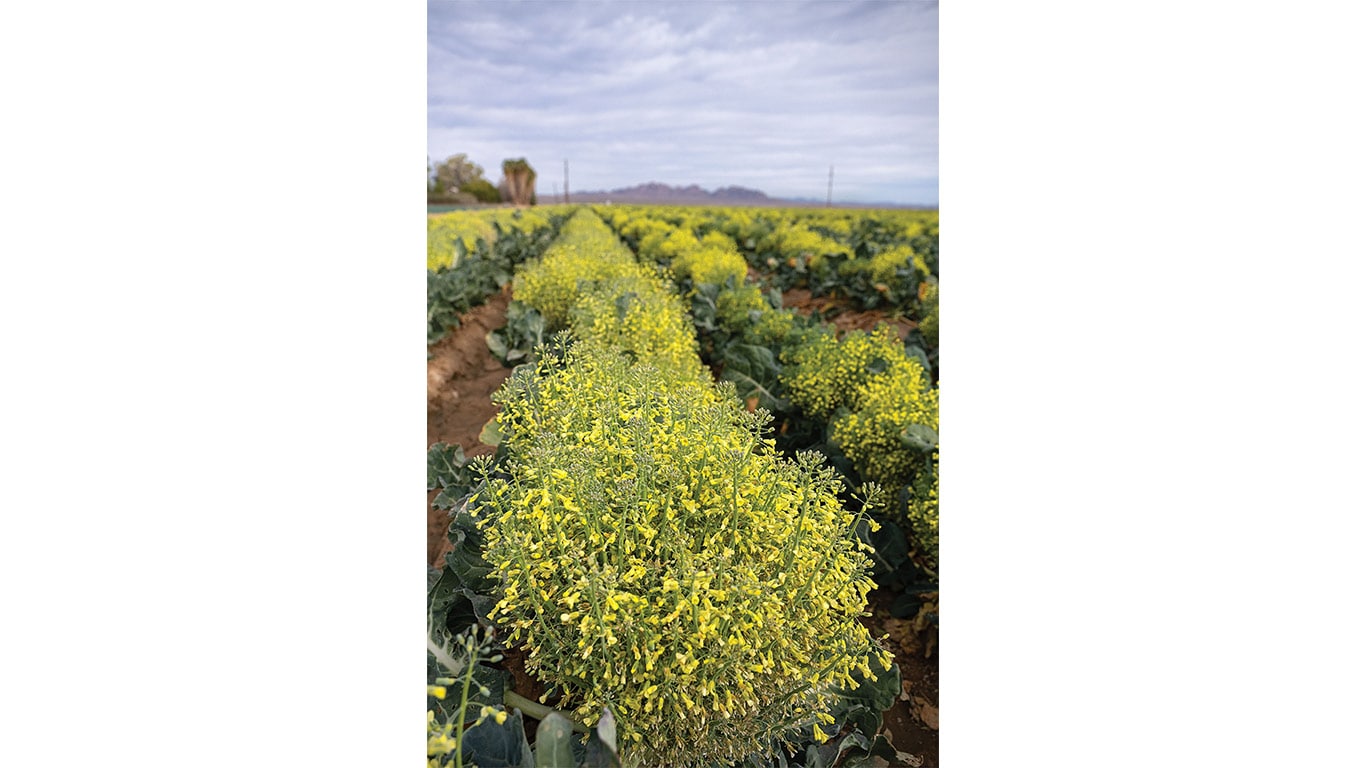
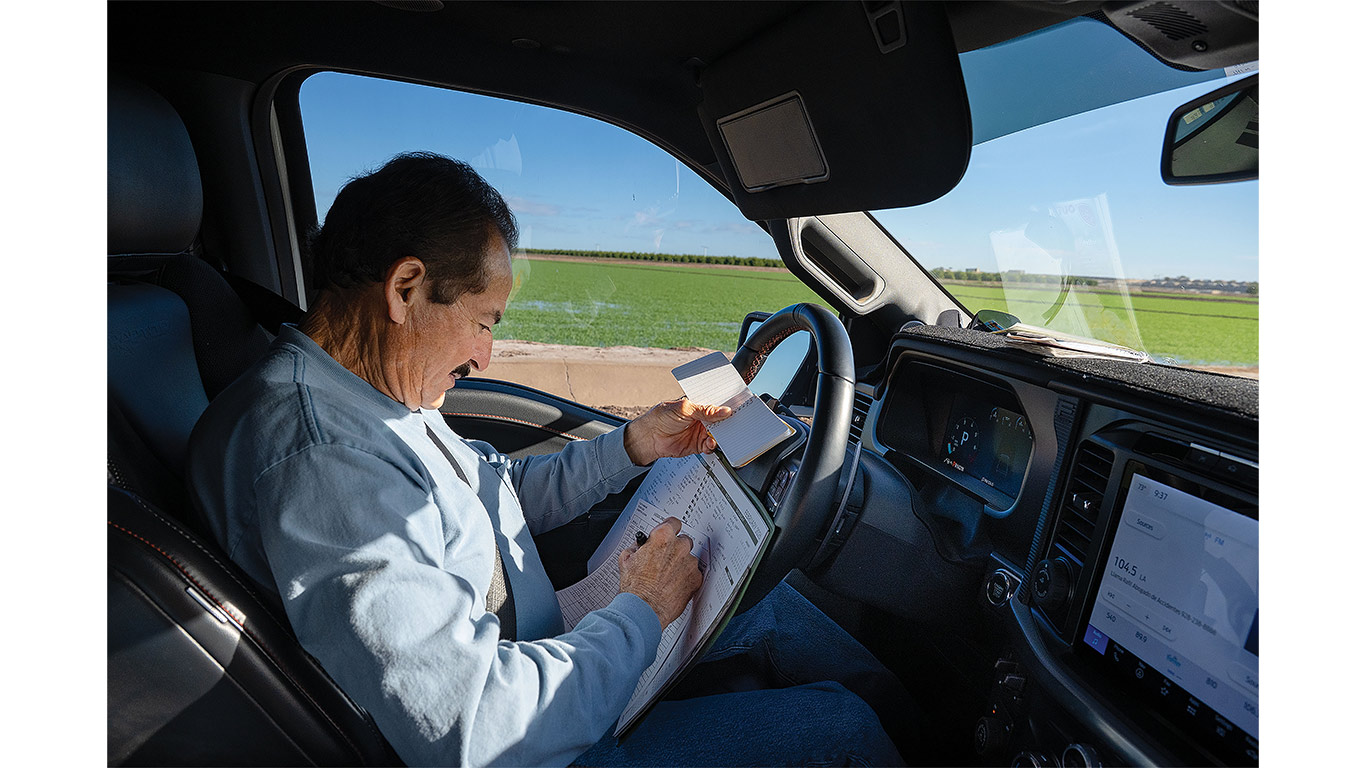
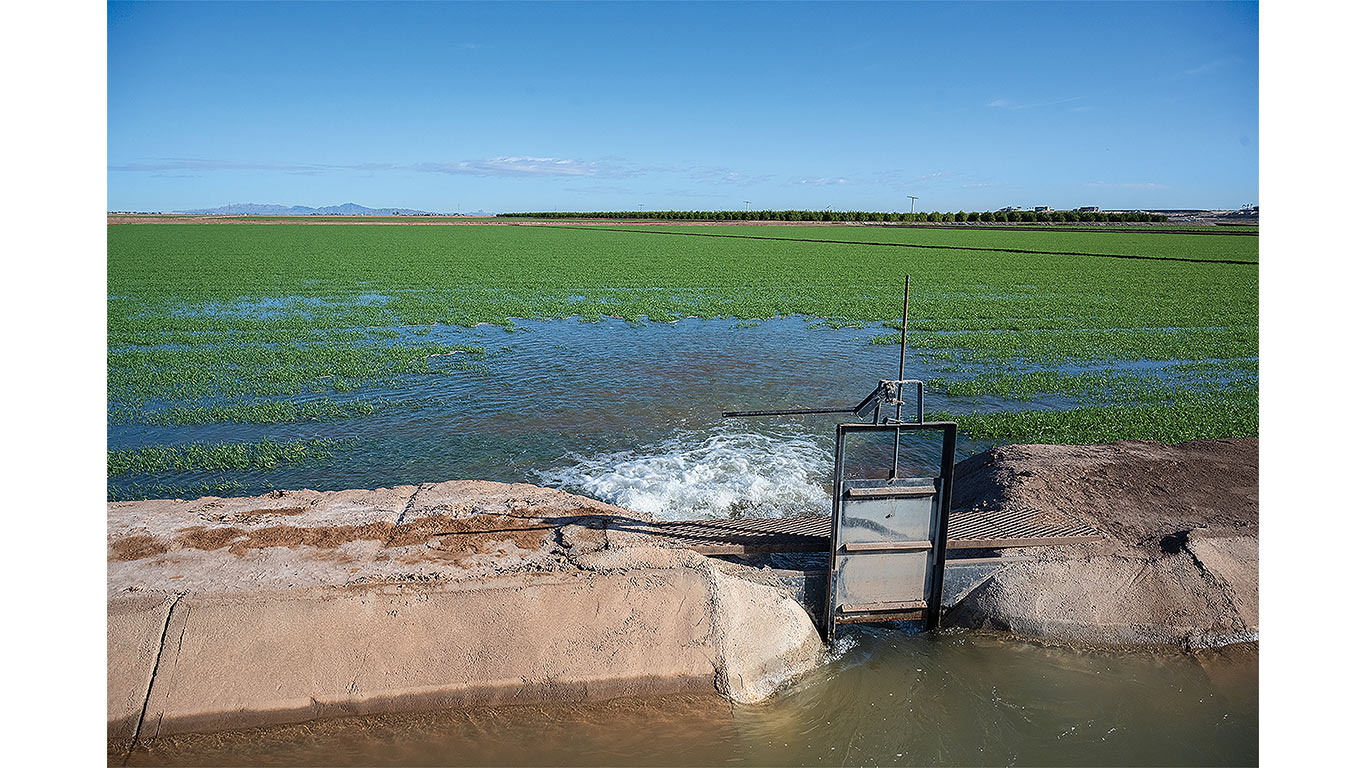
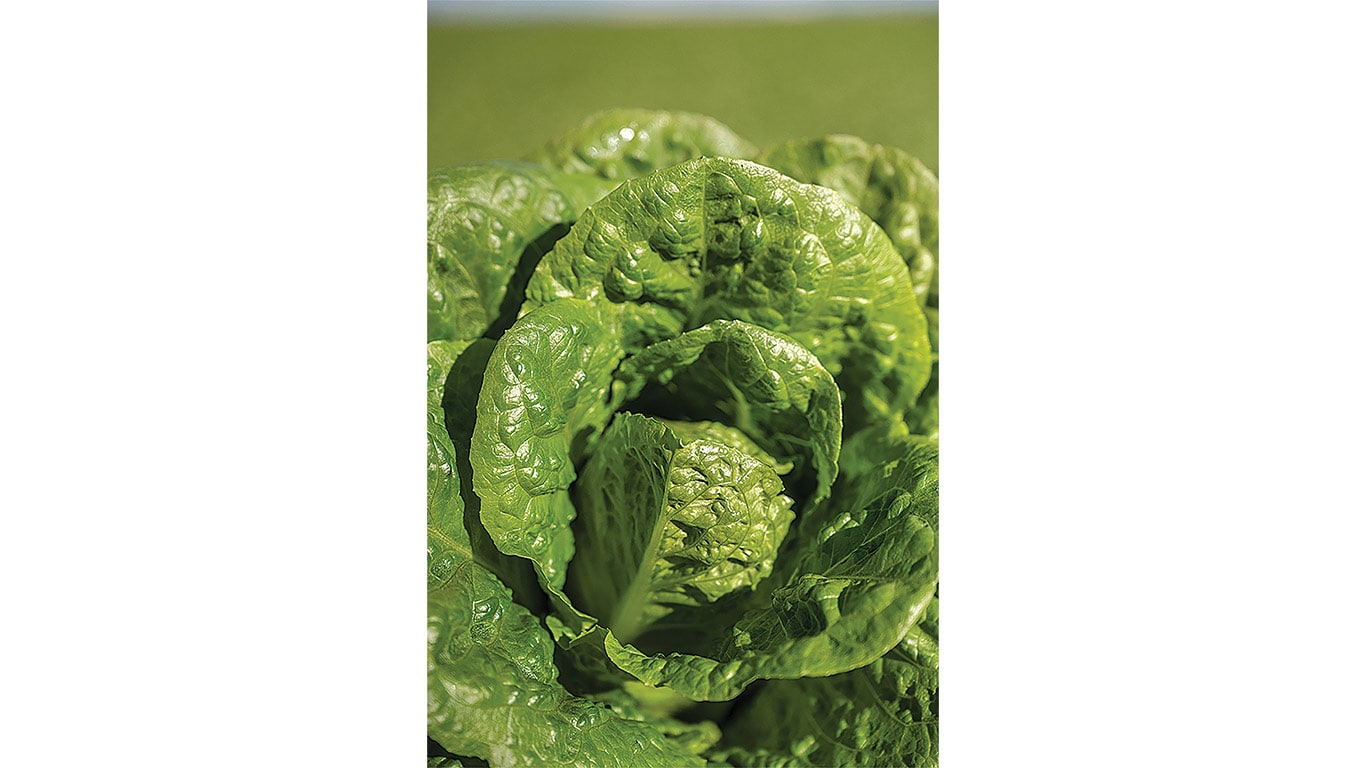
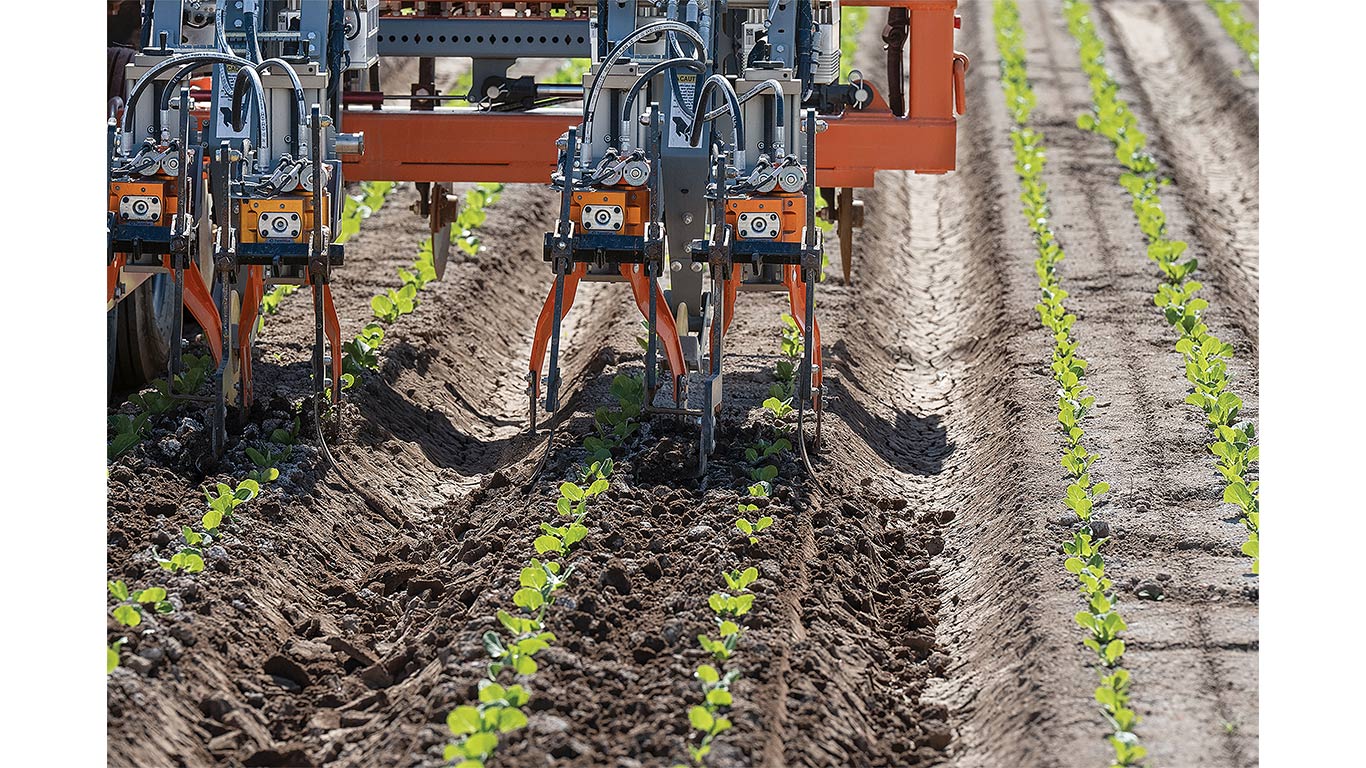
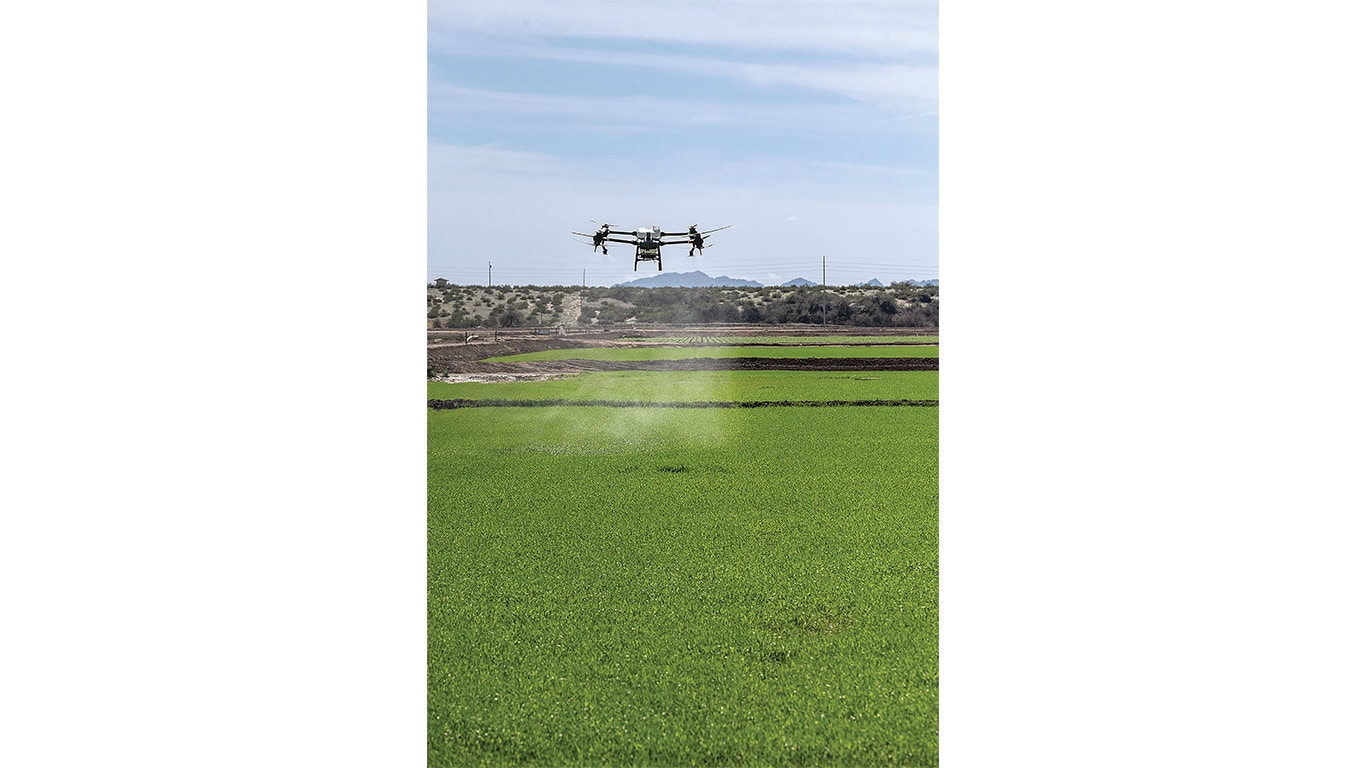
Above. The Yuma Valley is the winter nursery for high-value hybrid seed production. Jesus Tovar notes irrigation schedules in his organic fields. Crops are germinated with sprinkler irrigation then grown with flood irrigation. Laser leveling make flood irrigation highly efficient in this system, producing beautiful greens all winter long. Hand labor is still king, however some technologies are making advances. Camera and AI-guided weeders and thinners are effective, but slow. Drones are proving useful for bird deterrence and effective insecticide application.
Tech-forward. While labor will always be a critical facet of production, access to skilled labor is a concern. For now, manual labor is still the most cost-effective and timely way to manage many tasks, but equipment is making inroads.
A variety of mechanical weeders and thinners are now available. The latest round of weeders are using AI to guide action.
Thinners accurately spray acid or a high rate of nitrogen to thin densely seeded lettuce. Some weeders use lasers to target weeds.
"The laser allows you to get right next to the plant. I've seen a laser put a hole through a lettuce leaf to hit the weed underneath. It's great because there's no over spray or a crust from mechanical arms taking out plants, but it's slower than molasses," McGuire says.
Laser technology worked great in high-density organic crops like spinach. Unfortunately, packers started growing the high-value, short-term crop themselves.
McGuire is more encouraged about the aerial portion of his equipment lineup. On the 8,000+ vegetable acres JV Smith grows, McGuire has implemented drones for bird deterrence and insecticide application.
One pilot programs patterns for small drones to sweep the fields scaring off birds. The drones use loud speakers to blast music or predatory bird calls at 120 decibels. For now, they're limited to just two drones for the pilot due to regulations. However, McGuire sees potential to boost the program in the future.
He's found great advantages to using two large drones for most of his aerial chemical applications.
Drones provide more timely and controlled aerial applications.
"Drone capacity is rather low, so old chemistry where you need huge coverage made their use a problem. New chemistry, such as translaminar systemics, works great with drones because all you have to do is get a drop on the plant. We've actually found a number of chemicals that work better by drone, mostly because of timing," he says. The drones also produce less noise, reducing his complaints from area residents.
"There's a lot of risk in this business. Anybody who grows vegetables knows it's a gamble," Tovar says. He grows a lot of organic vegetables, taking on more risk and complexity. "Everything in life is a challenge. Believe it or not, that's what makes it fun!" ‡
More articles related to:
Read More of The Furrow
AGRICULTURE, LIVESTOCK/POULTRY
Your Next Vet
Grit, guts and passion are hallmarks of the next generation.
AGRICULTURE, SPECIALTY/NICHE
Stubbornly Dedicated to Mules
Long ears come with big hearts and an admirable grit.