 A John Deere Publication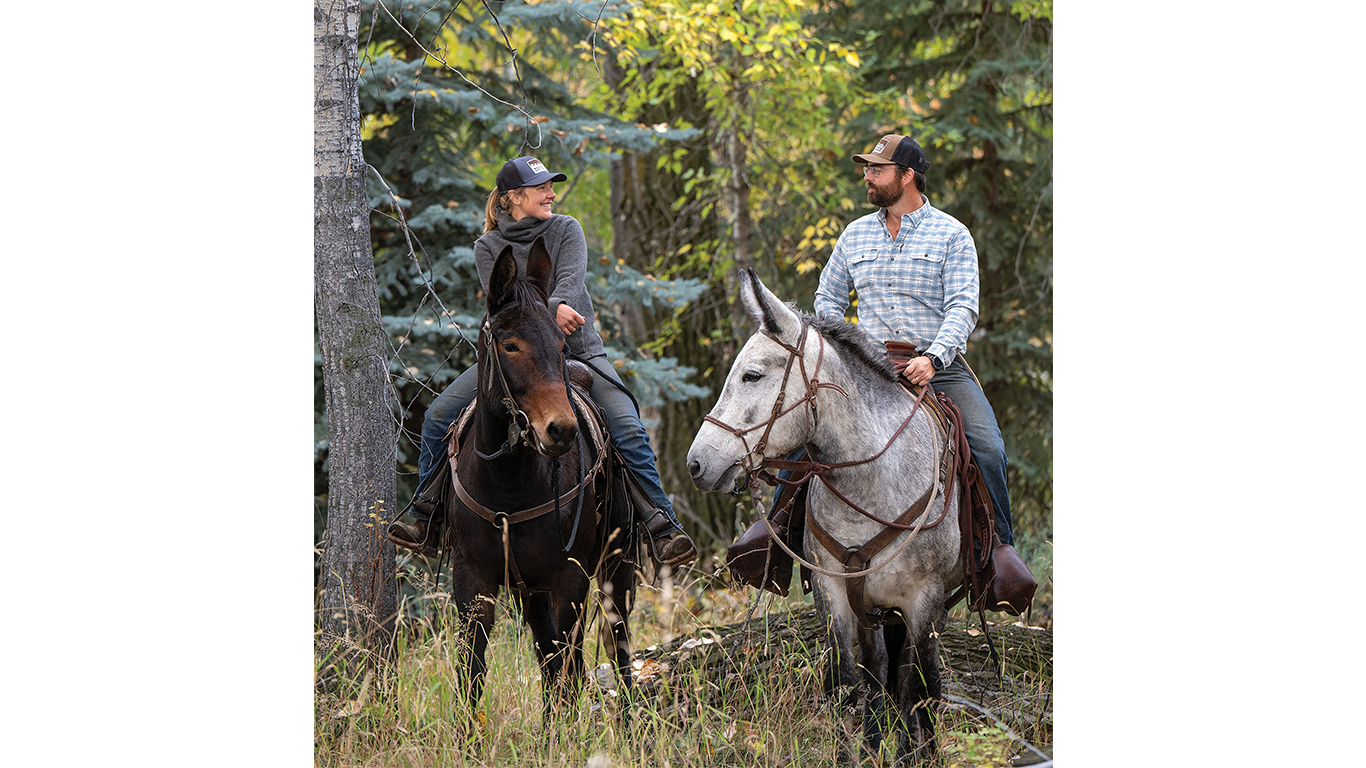
Maureen Anderson and Chase Packard raise and train mules for their backcountry guide business. They say mules are fantastic at calming nervous riders. Many of their clients are "mule people" by the time they finish their journey.
Agriculture, Specialty/Niche September 01, 2026
Stubbornly Dedicated to Mules
Long ears come with big hearts and an admirable grit.
Story and Photos by Martha Mintz
Maureen Anderson is careful to sing the praises of both horses and mules equally, just in case any of the 80 ears in their herd are listening and might take offense. Her husband, Chase Packard, isn't so discrete.
"Mules are by far the superior animal. They just are," he states in matter-of-fact fashion.
Anderson and Packard maintain a robust herd of mules and horses for their backcountry guide business, Yellowstone Horse and Mule. Based in Absarokee, Montana, they spend summers and falls guiding adventurers, fishermen, and hunters deep into the Beartooth Mountains and Yellowstone National Park.
Many such operations use mules only for packing gear. Anderson and Packard find mules to be excellent mounts, too, and usually guest favorites.
Opinions on mules tend to concentrate on the far reaches of the love/hate spectrum. For Anderson, it's just a simple matter of understanding.
"Some people hate cats because they want them to be dogs. I think people sometimes hate mules because they're not horses," she says.
True to their reputation, mules can't generally be forced to do things that weren't their own idea in the first place.
"Horses are easy to boss around and dominate. With mules you have to be more creative. I think it makes you a better trainer and a better person," Anderson says. She jokes many a cowboy have had their feelings hurt by a mule. "They're really good at making you look stupid. That's hard on a cowboy's ego. If you're going to be a mule person, you have to put your ego aside."
With challenge comes great reward. When adventuring into rugged landscape rife with stunning—but often dangerous—wildlife, mules prove their worth.
For one, mules tend to choose fight over flight. Anderson and Packard have many tales of mules chasing off bears and standing up to bison.
One time when an employee, Will, went to wrangle mounts the herd took off at a run. One mule stayed, transfixed by something behind Will. The mule, Trapper, had spotted two grizzly bears not 50 yards away.
"He stared the bears down and ran toward them with ears pinned back. He chased them down the hill and came right back to Will," Packard says. "Will spoiled Trapper after that."
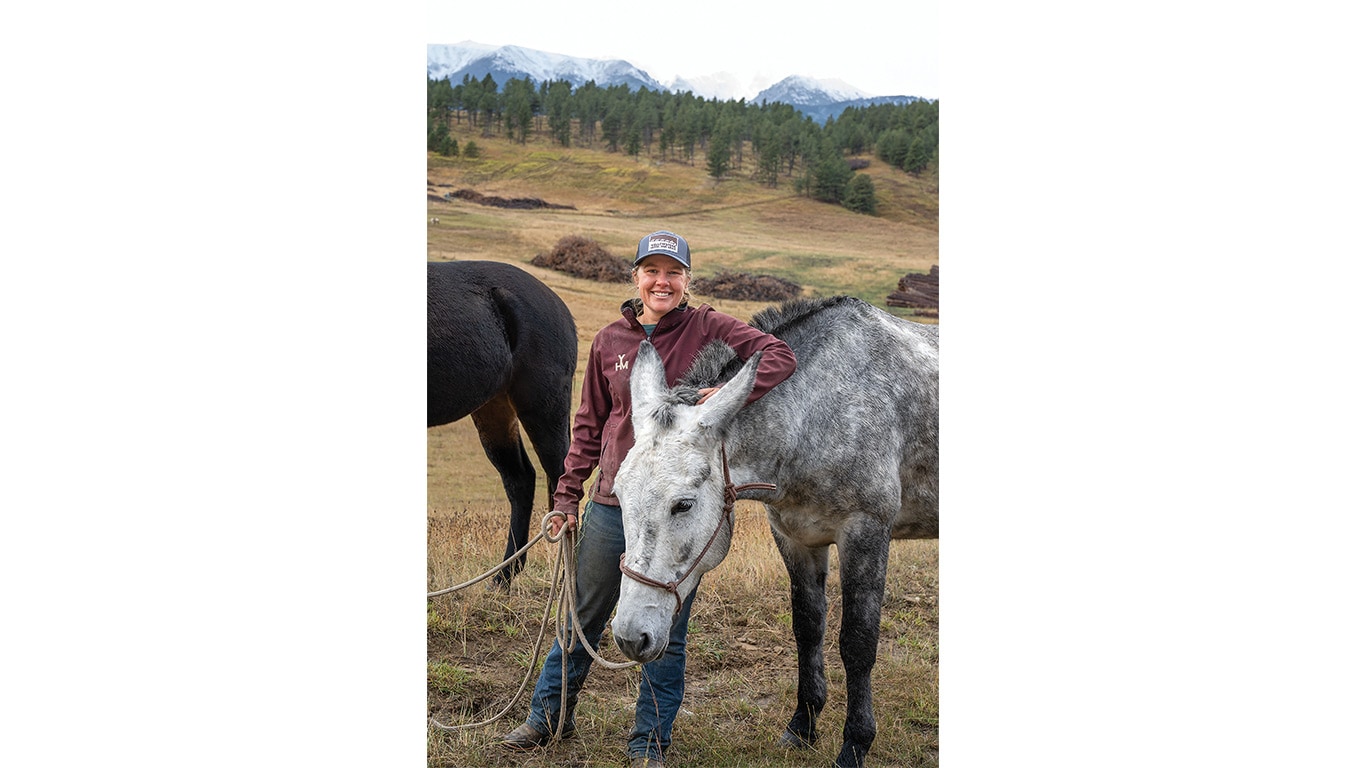
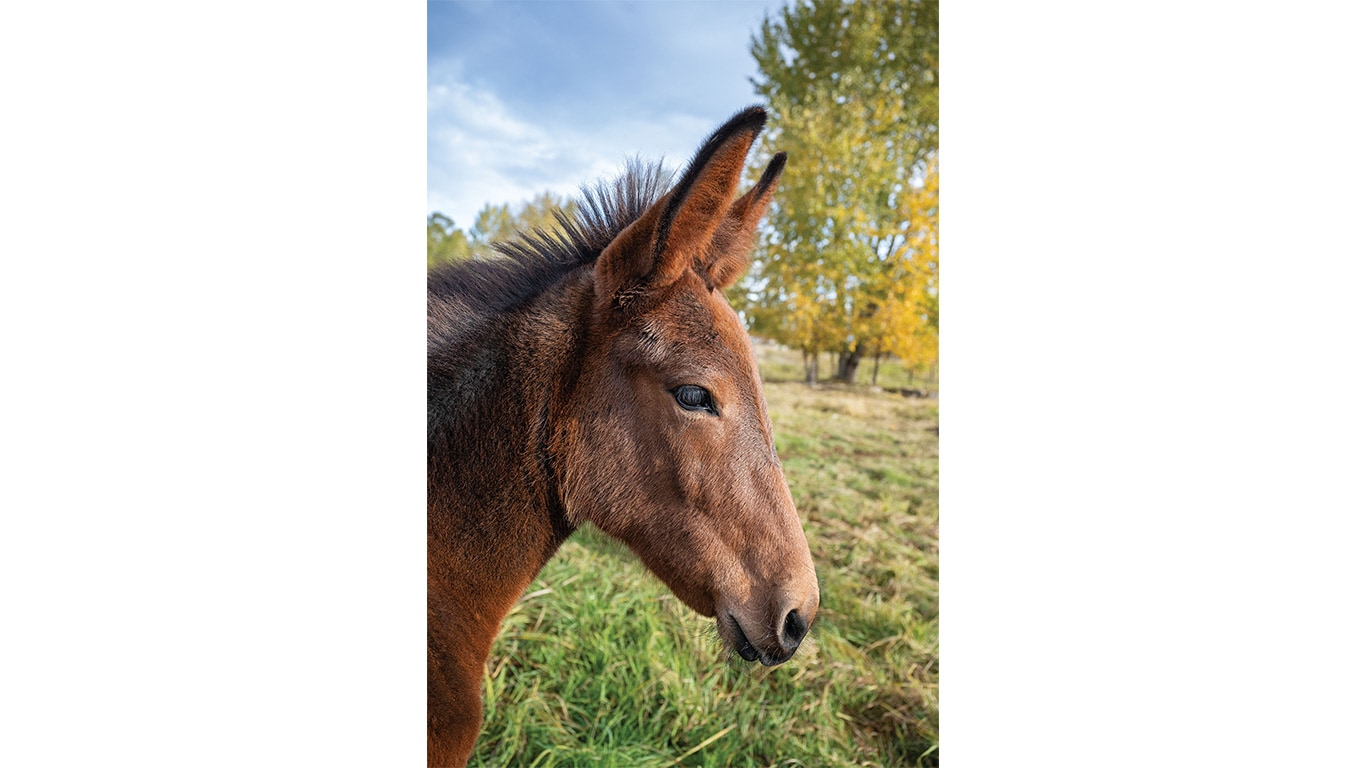
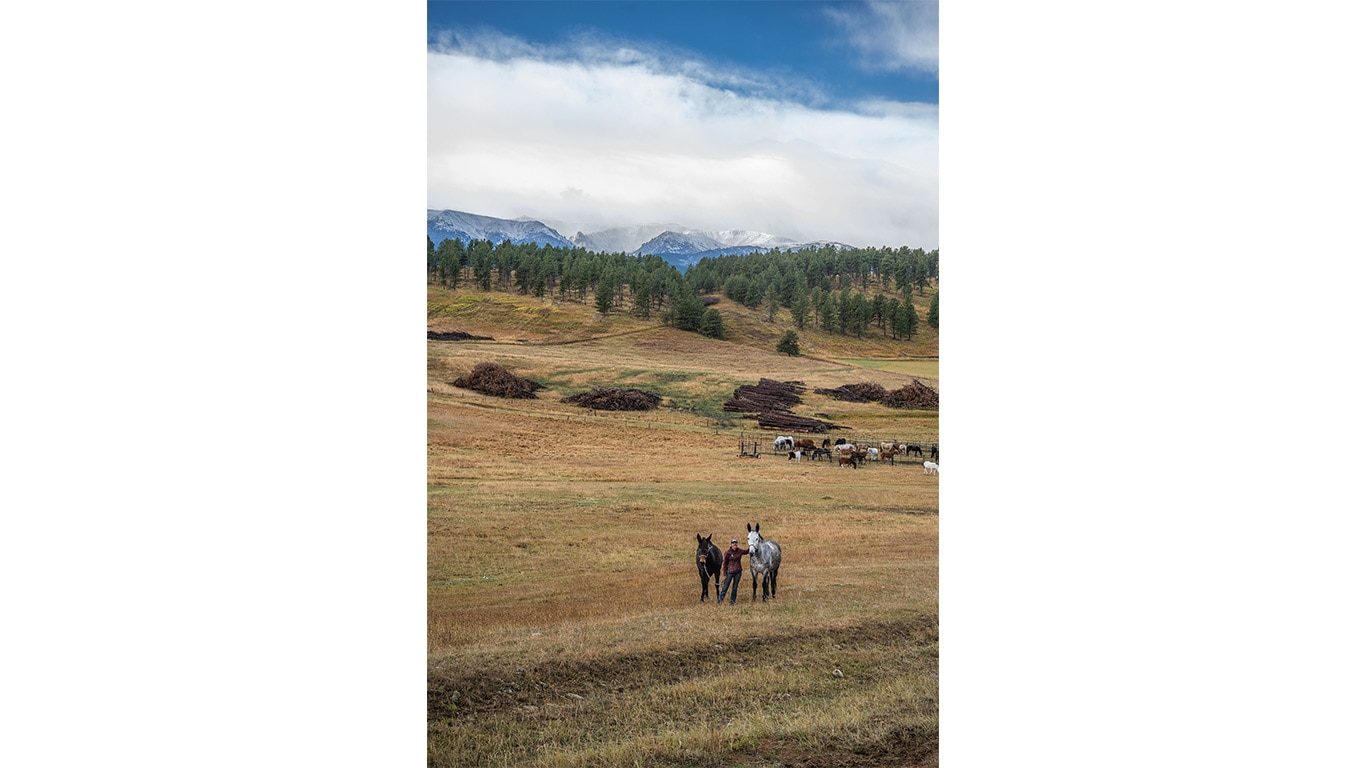
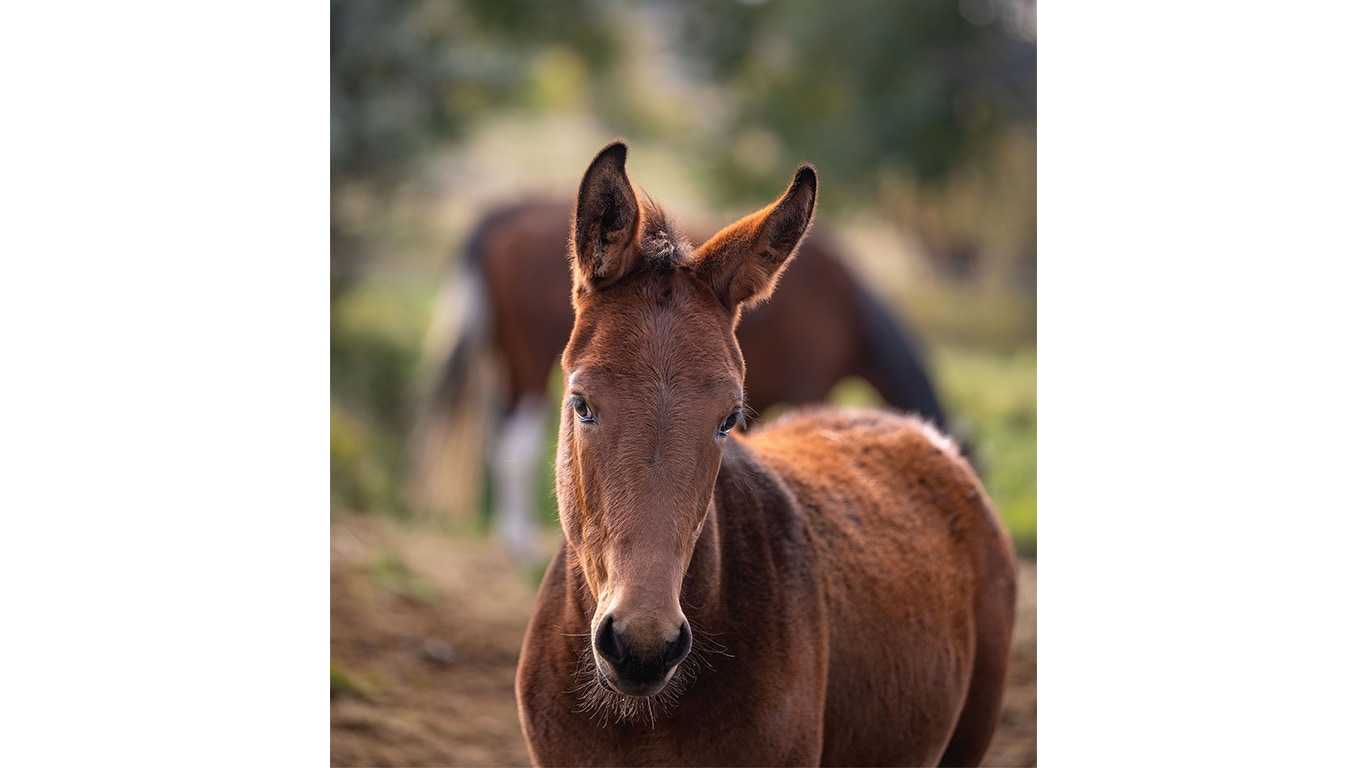
Above. Maureen Anderson enjoys the challenge of training mules. It's a task that requires creativity and patience, but one that is well rewarded once trust is earned. A herd of 40 horses, draft horses, and mules are used to spirit guests away to the rugged remote reaches of the Beartooth Mountains that loom over their pastures. Macaroni is one of three foals born in 2025. In a few years she'll be riding the trails with the herd.
Steady companions. Anderson loves when the mules get 'happy flappies.'
"Their ears flap back and forth when they're relaxed and going down the trail. Mules love having a job and once they learn it, they're really happy to do it. Mules are great for beginners and nervous riders, they just take them down the trail," she says.
It's a task they do safely. Mules have smaller, more vertical hooves than a horse's.
"Mules are more on their toes," Anderson says. When on steep terrain, horses stumble and work to find their steps. "Mules just scramble right down. Their feet are smaller, which lets them step places a horse's hoof won't fit. They also distribute their weight a little more evenly front to back than a horse."
Mules are very emotionally intelligent, Anderson says. Once you've earned their trust, you are locked in. However rehabbing a mule that's been treated poorly is a challenge. It's one of several reasons Anderson and Packard now raise and train their own mules using natural horsemanship practices. They produce mules that love their jobs and are loved in return.
"We're big on turning guests into mule people," Anderson says. Guests like to commune with the herd in camp at the end of a long day. "Mules are always the first to come up and get scratches. They're always happy to see you.
"One of the best things about what we do is sharing our animals with other people and seeing that they get as much enjoyment from them as we do. It's hard not to love mules." ‡
More articles related to:
Read More of The Furrow
AGRICULTURE, EDUCATION
Fresh From Yuma!
The winter salad bowl delivers greens Thanksgiving through Easter.
SPECIALTY/NICHE
Butter Tart Trail
On the road for Canada's classic baked treat.