 A John Deere Publication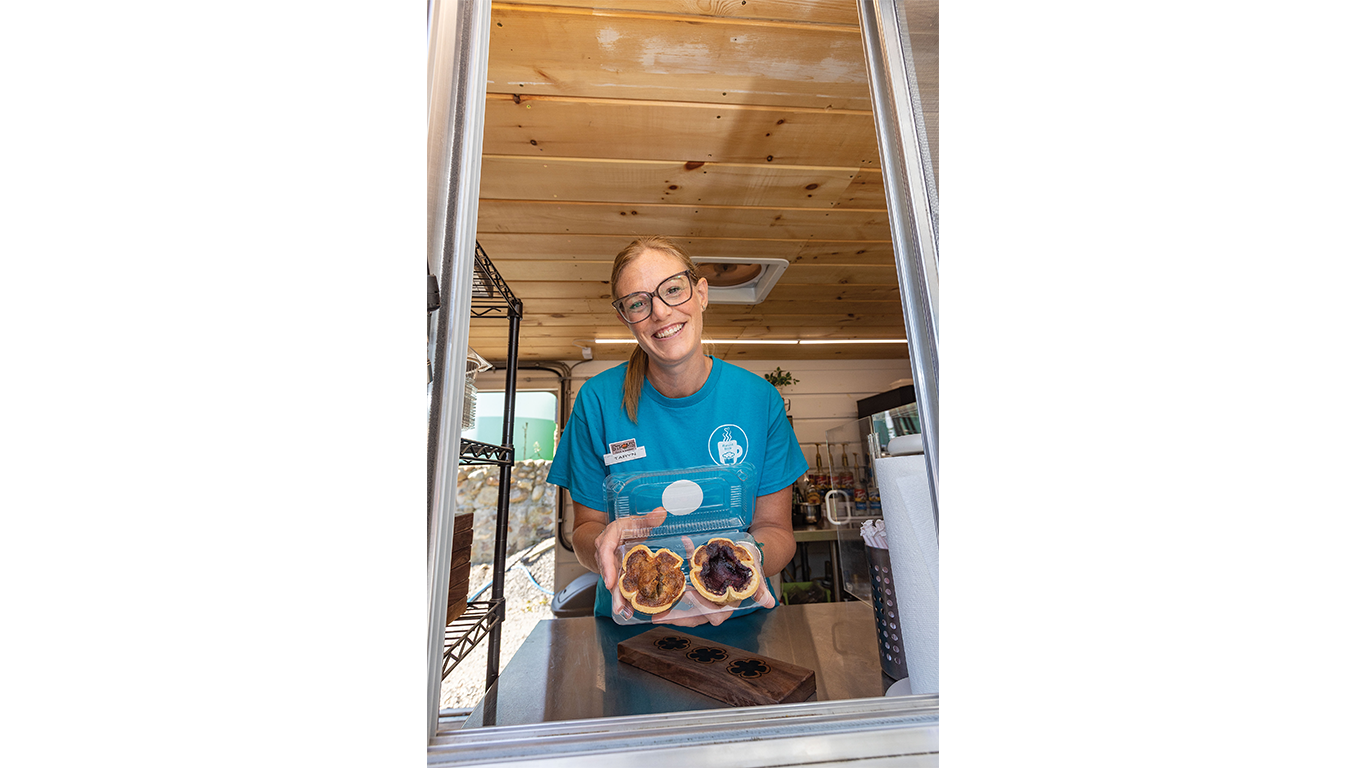
Taryn Barth with Strom's Farm and Bakery offers customers a choice between multiple butter tart options.
Specialty/Niche September 01, 2026
Butter Tart Trail
On the road for Canada's classic baked treat.
Story and Photos by Lorne McClinton
Every country has its iconic dessert. Americans have apple pie and the French have crème brûlée. Canada doesn't have one, but if it ever held a competition to name one, the butter tart would be in the running. But ask three Canadians what a proper butter tart is and you'll get at least four opinions.
There's been a fierce ongoing debate over this for at least a century. Should the filling be runny or firm? Lots have opinions about whether the crust should be buttery and flaky or more like shortbread, too. But it's the debates over whether the filling should be plain, or contain raisins, currants, or pecans, that get heated. Social media threads over this will sometimes spiral into full-blown pastry wars.
That passion though, sparked a uniquely Canadian idea: butter tart tourism. In Ontario, two regions have fully embraced the concept. Wellington County's Butter Tart Trail, part of its Taste Real Local Food program, can be found on the west side of Toronto. The Kawarthas-Northumberland Butter Tart Tour is found on the east. Both of them offer self-guided road trips that lead visitors from farm markets to bakeries and small-town cafés to find a tart to their taste.
Christina Mann, manager of economic development for Wellington County, says the idea first surfaced in 2006 when communities in Wellington North were searching for a way to draw visitors off the 401 expressway and into rural businesses.
"They realized one product almost everyone had locally was the butter tart," Mann says. "Many bakeries in the region were already making them, and they were something visitors could easily identify with."
Initially the trail included venues making anything remotely butter-tart inspired. It included pottery makers, artisans, and even novelty products like butter tart shaped dog treats. But visitors made their preferences clear quickly, they wanted butter tarts.
"We now have a butter tart map that currently features 18 bakeries," Mann says. "It only focuses on butter tart foods. It also directs visitors to spots that have gluten free and one location even offers a keto butter tart. It's a self-guided tour so visitors can go to our website and build their own route." (wellington.ca/experience-wellington/farm-food-experiences/butter-tarts)
About two hours northeast, the Kawarthas Northumberland region had a similar idea. The Kawarthas Northumberland Butter Tart Tour began roughly 15 years ago to promote tourism in the region as well.
"We were looking for that little marketing hook and butter tarts quickly emerged as the obvious choice," explains Brenda Wood, executive director of Kawarthas Northumberland tourism. "It's that quintessential Canadian dessert. A lot of our bakeries were already serving them. So, we thought why don't we see if we can gather up enough locations to create a butter tart tour."
They started out with just a few spots, but it's now grown to include over 40 bakeries and restaurants scattered across the region. There's just one main requirement; businesses must make all their butter tarts onsite.
Visitors can choose their own adventure through their website, buttertarttour.ca. The variety that's available is staggering.
"Bakers have gotten incredibly creative and are adding their own nuances," Wood says. "They're doing maple bacon, pumpkin, chocolate, caramel, and even Turtle and Skor chocolate bar butter tarts. While some like the new flavors, there are lots of die-hards who prefer butter tarts like grandma used to make."
That's part of the reason why people can feel so strongly about what's in a pastry filling. Butter tarts are so ingrained in Canadian culture that eating them is a personal tie to your past. They're entwined with happy memories.
"What's my favorite? Oh, throw me under the bus," Wood says. "I like a flaky crust with a firm filling. I've tried some of the new ones; Turtle, Skor, or pumpkin with butter tart fillings are to die for. I'll probably be hunted down for this, but I'll go for a pecan every day. My go-to choice will always be one with nuts. But that's my mother, she always put walnuts or pecans in hers."
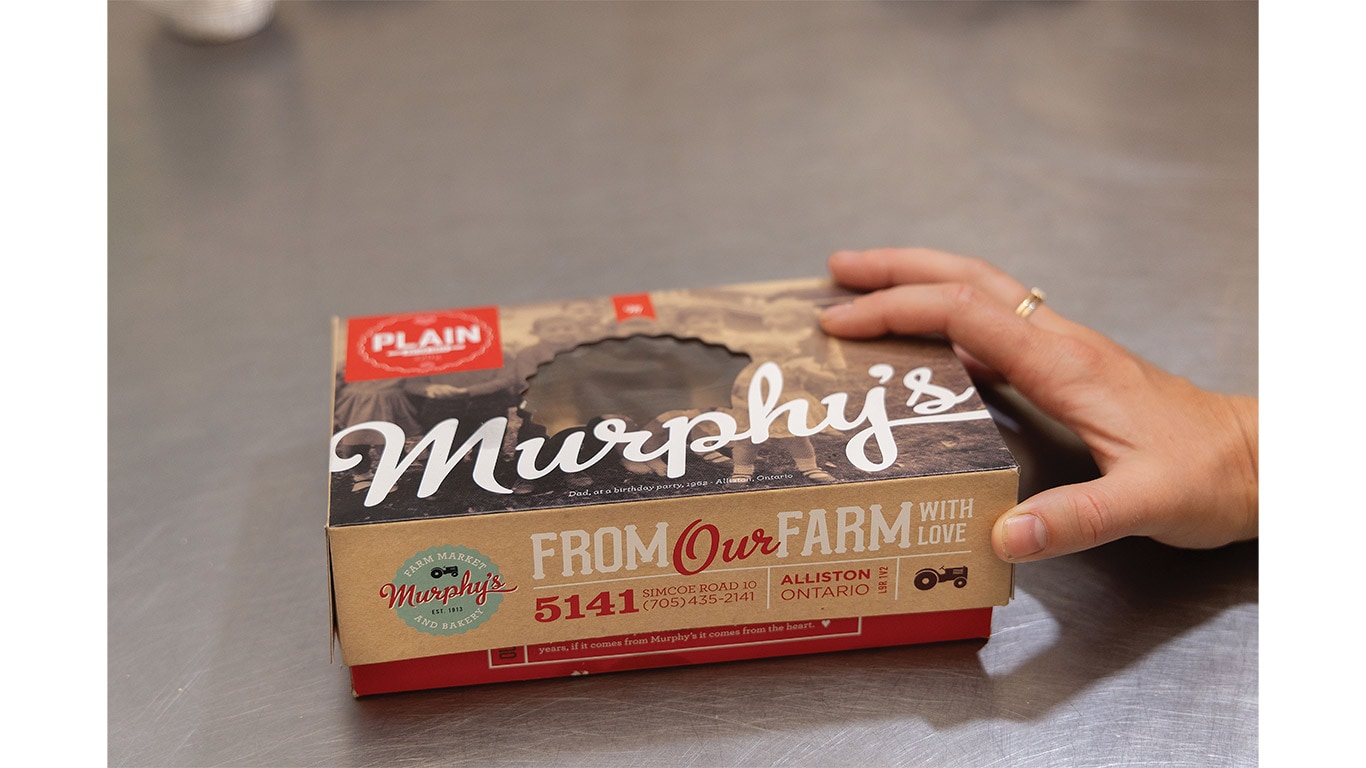
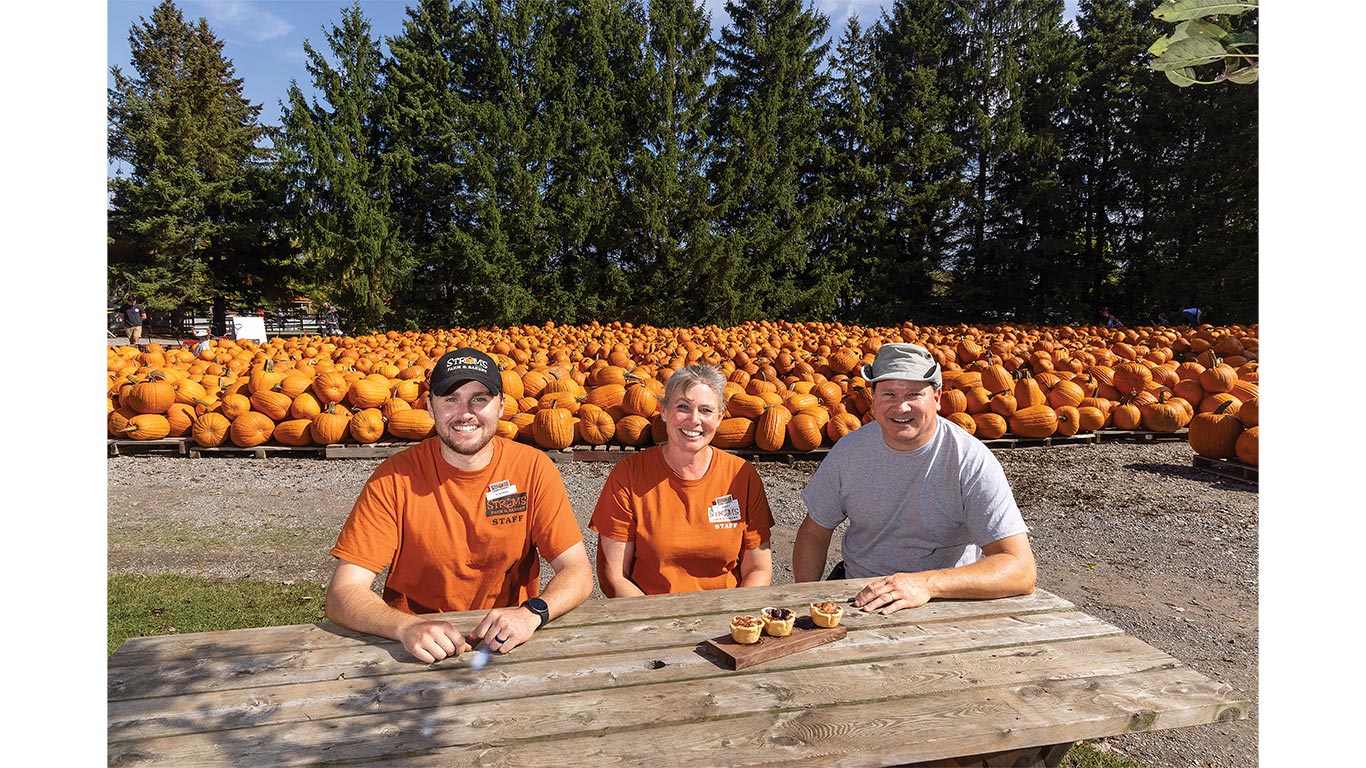
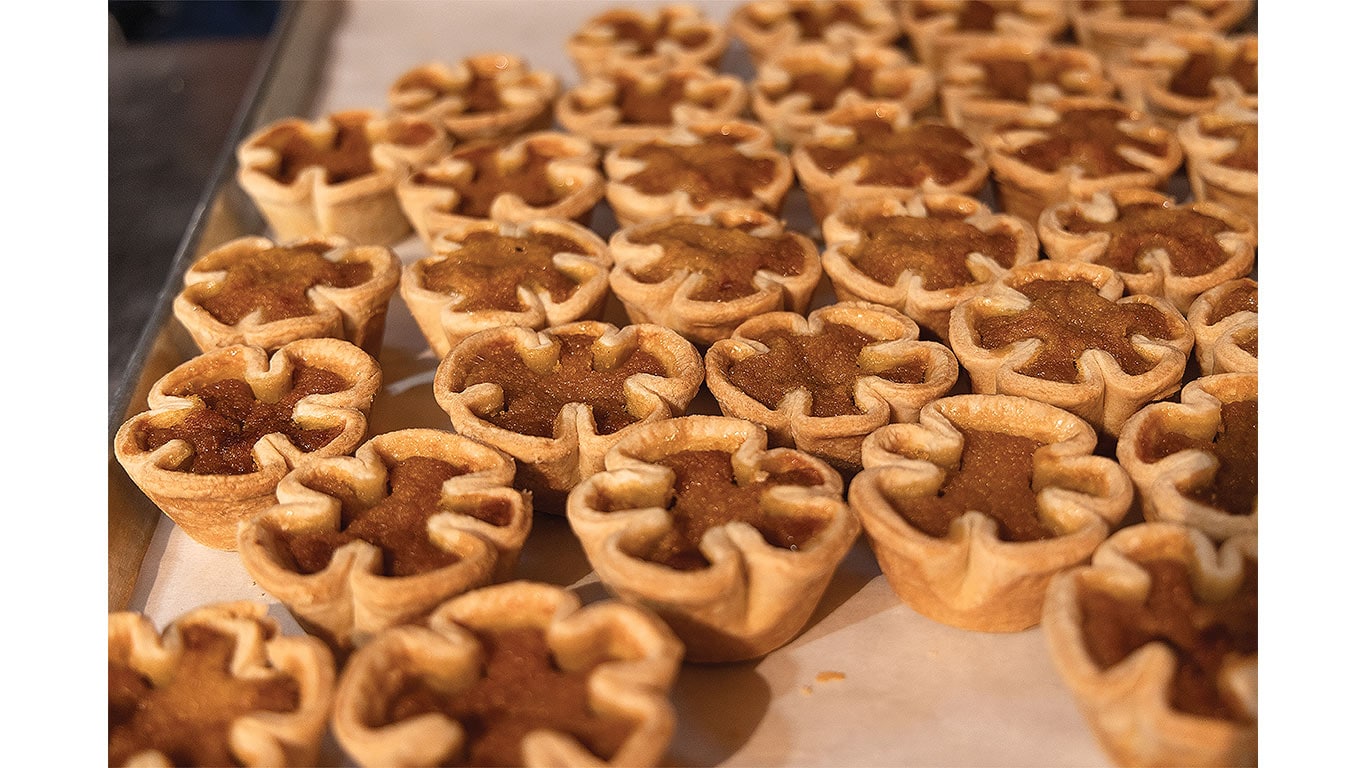
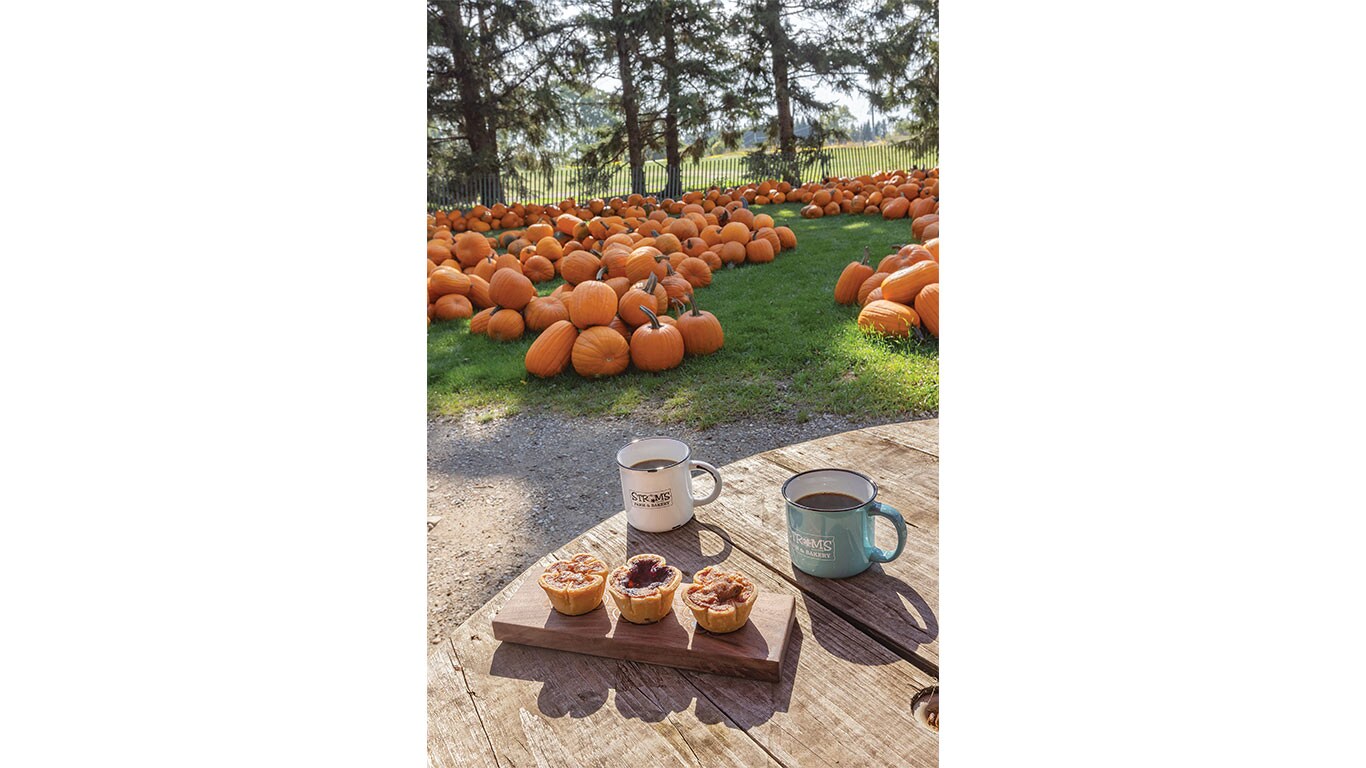
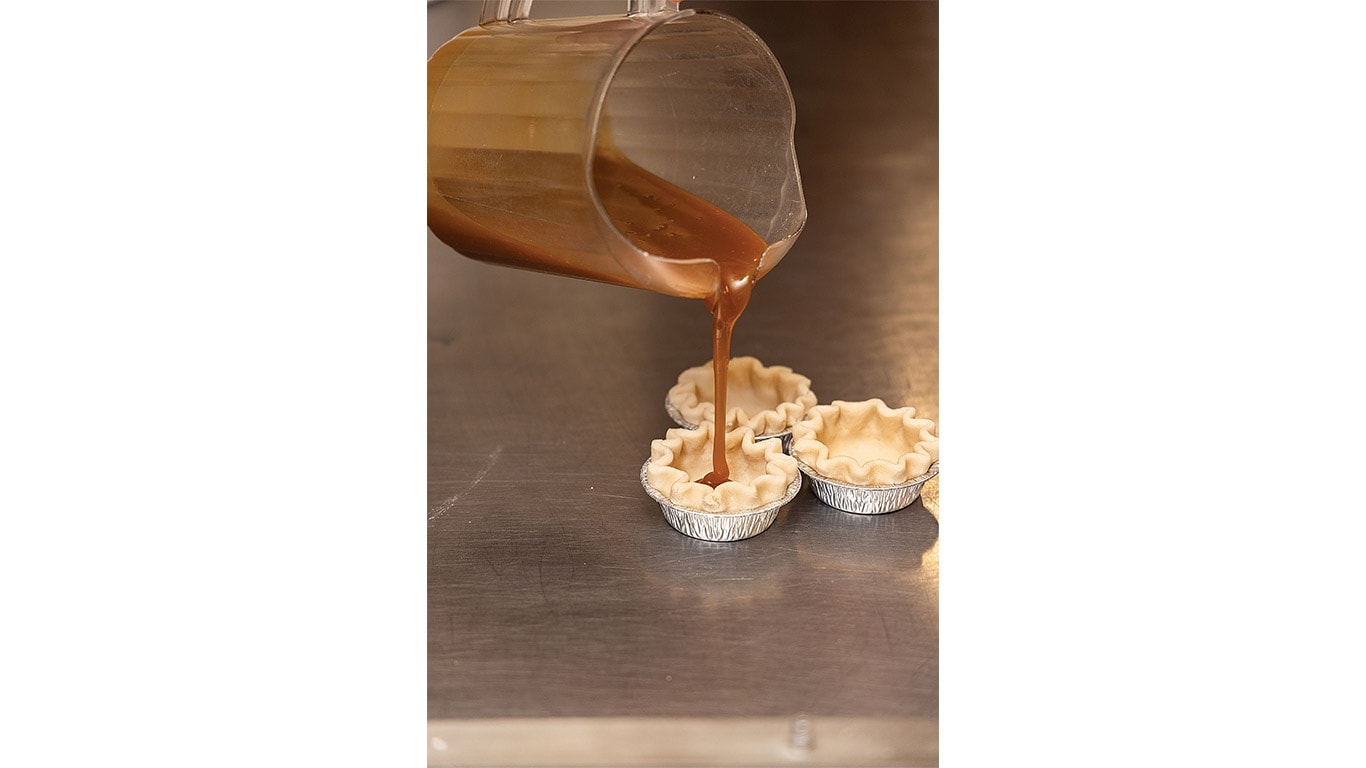
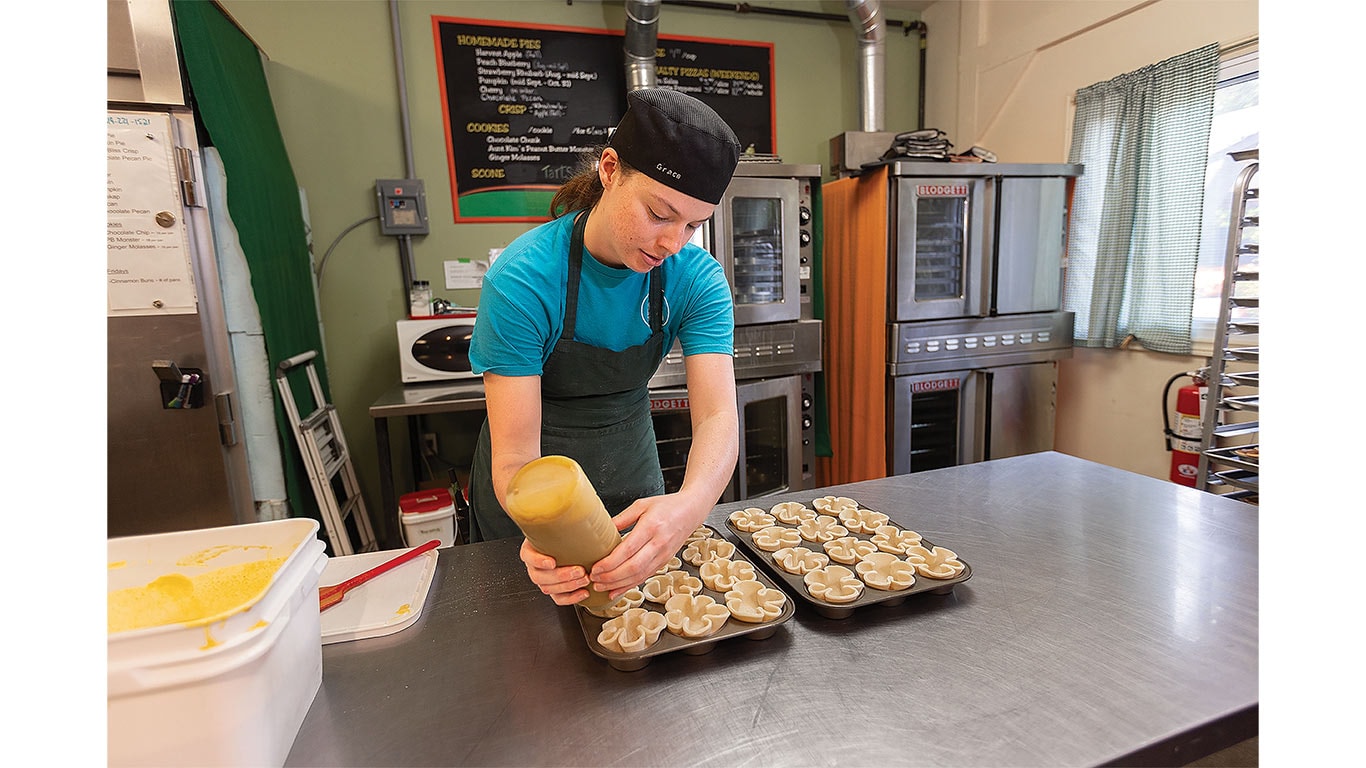
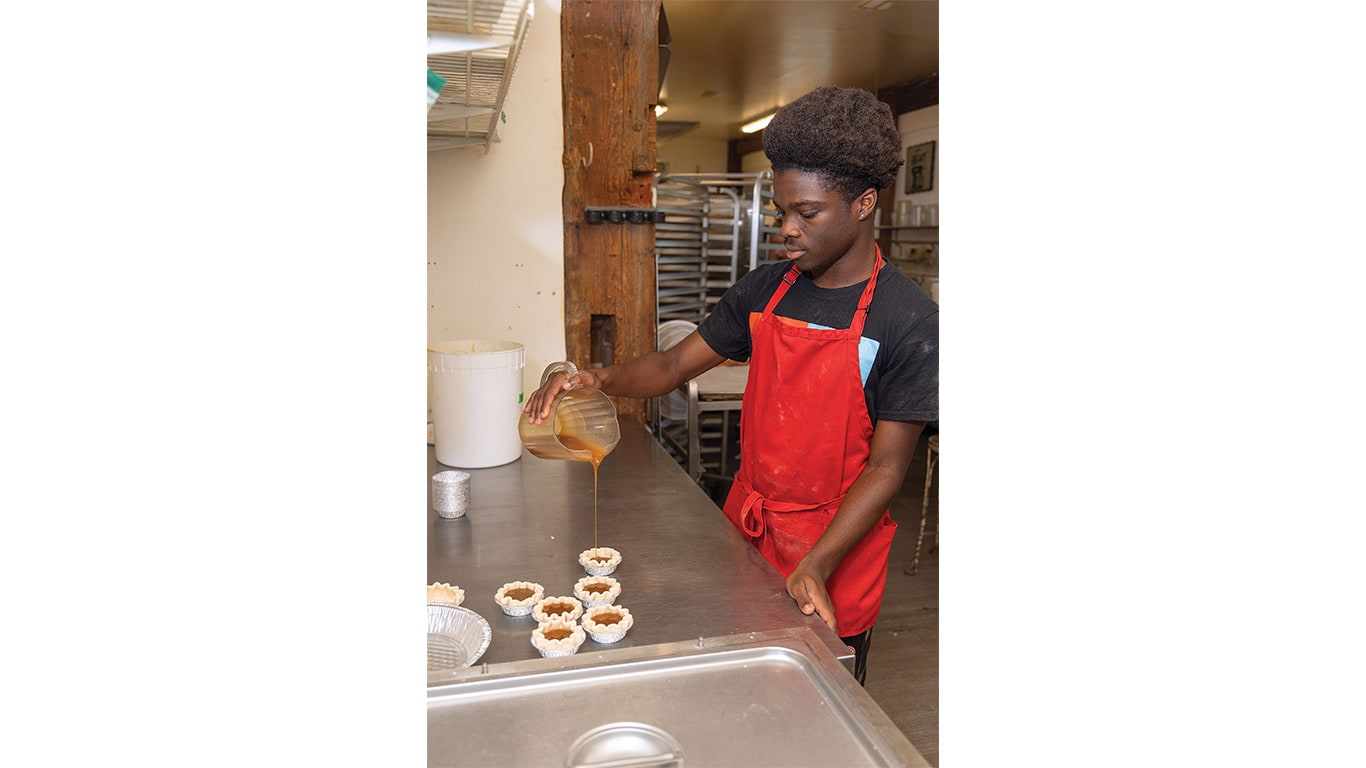
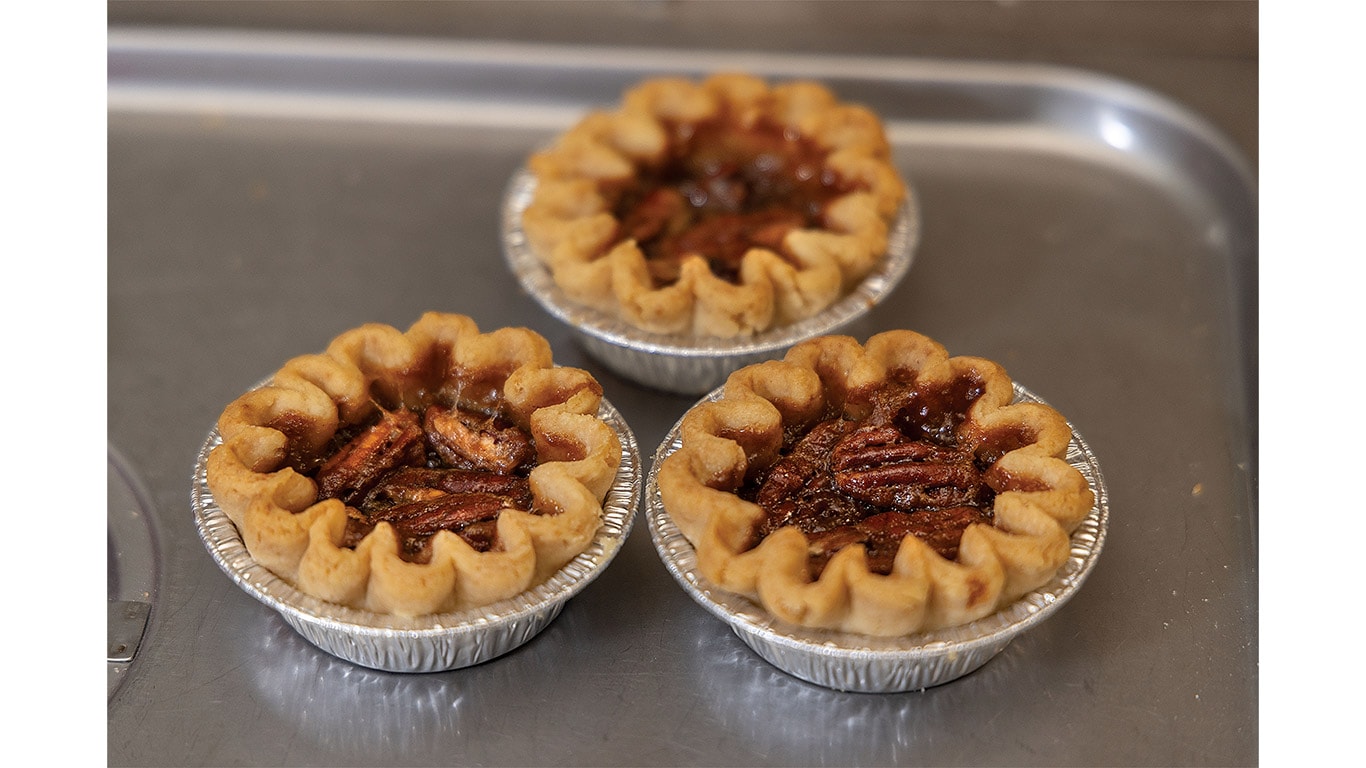
Above. Murphy's Farm Market sells plain, raisin, and pecan butter tarts. Evan, Amy, and Channing Strom offer six types of butter tarts at their operation: classic butter, pecan, raisin, pumpkin, chocolate pecan, and haskap. Taking a page from microbreweries they offer visitors the opportunity to purchase flights of tarts to allow visitors to sample different flavors. Grace Neuman makes a new batch of tarts at Strom's bakery. Winfred Sarpong fills butter tart shells with butter tart filling at Murphy's Farm Market near Alliston, Ontario. Tarts are baked fresh at the farm's bakery every day and sometimes twice a day on busy weekends. Each tart's crust is handmade at Murphy's Farm Market so every one is a little different. Bakery staff compete to see how many flutes they can put into a tart shell. The record is 24. Their customers notice details like that.
Butter tarts' exact origins are unclear. The first published recipe came out in 1900 in The Women's Auxiliary of the Royal Victoria Hospital Cookbook that was sold as a fundraiser for the Barrie, Ontario, hospital.
"Mrs. Malcom Macleod had submitted a recipe for 'filling for tarts,'" the Canadian Encyclopedia states. "It consisted of two simple lines, 'FILLING FOR TARTS—One cup sugar; ½ cup butter; 2 eggs; 1 cup currants; mix. Fill the tarts and bake.' Bake historically meant placing them in a hot oven usually set around 350-375°F for 20-25 minutes."
However, historians suspect that butter tarts' roots date back to the 1600s when the earliest French settlers adapted the sugar pie recipes they were familiar with in France, to local ingredients that could be found in Quebec. One theory credits the 'Filles de Roi,' a group of 770 young women who were sent to The New World by the King of France between 1663 and 1673 to become wives for the early male settlers.
Farm experience. Butter tarts have become an important part of the visitor experience at many farm markets. But they weren't part of the original business plan for Strom's Farm and Bakery near Guelph. Strom's began selling sweet corn at a farmstand decades ago. Over time they added pumpkins, corn mazes, and now offer a variety of fall activities between mid-September and Halloween. Adding a bakery in 2006 was the next logical step.
"We had a consultant come in to see how we could add more value to the farm," Amy Strom says. "He suggested either strawberries, Christmas trees, or a bakery. We chose the bakery."
Butter tarts weren't on the menu when the bakery first opened its doors. Amy came from Pennsylvania and hadn't grown up with them. They placed their main focus on pie instead.
A devastating apple crop failure across the region in 2012 changed their minds. Since they were unable to make apple pies, their bakers turned to tarts. They developed a recipe that avoided corn syrup to make a firmer filling and tone down the sweetness. Today the bakery produces six varieties including: classic butter, pecan, raisin, pumpkin, chocolate pecan, and one flavoured with haskap grown on their farm.
"The haskap one is my favorite," Amy says. "The berry tastes like a cross between a blueberry and a raspberry. I like the combination of the tartness of the berry with the sweetness of the butter tart. But our best seller is the plain butter tart, the second best is the pecan. I think only about 10% of the population like raisins."
Butter tarts are a signature item at Murphy's Farm Market near Alliston, Ontario. They opened in 1999, and their butter tarts have taken on a life of their own.
"I think it's just our heritage," says market manager Heather Rodger. "Butter tarts are a staple in small towns. We've all grown up with butter tarts being a treat and that lives on."
The crusts are handmade; every tart is a little different. Bakery staff compete to see how many flutes they can put into a tart shell. The record stands at 24; their customers notice details like that.
Murphy's Farm Market sells three kinds of butter tarts: plain, raisin, and pecan. Rodgers says the controversy over which is best is very real, however it's hard to tell which are most popular.
"We haven't figured out the science yet, every weekend is different," Rodgers says. "One week raisin will outsell pecan, and then the next week, pecan outsells raisin. There's no rhyme or reason to the pattern that we can tell. If you can figure it out let us know."
Butter tart tourism is a little whimsical, but Wellington County and Kawarthas-Northumberland have found it to be a great tool to get visitors to turn off the main highways. There they discover farm markets, roadside stands, small bakeries, and explore rural communities. Plus, if their sweet tooth acts up, they can always find a butter tart nearby. ‡
More articles related to:
Read More of The Furrow
AGRICULTURE, SPECIALTY/NICHE
Stubbornly Dedicated to Mules
Long ears come with big hearts and an admirable grit.
AGRICULTURE, FARM OPERATION
Late Season Lessons
Next year's corn crop starts now.