 A John Deere Publication
To achieve record-breaking corn yields, David Hula spends a lot of time in the field scouting crops and taking weekly tissue tests. Years of test results show that phosphorus fertilizer is vital.
Agriculture, Farm Operation September 01, 2026
Late Season Lessons
Next year's corn crop starts now.
Story and Photos by Bill Spiegel
David Hula's yield monitor has shown some whopping numbers through the years: 540 bushels per acre. And 572, 616, and 623. That's why the farmer from Charles City, Virginia, has set the world record for corn yield five times.
Not every field is a yield champion. In fact, Hula learns just as much from fields that show—for him, anyway—poor yields. It's why he carries a soil probe in his combine and takes copious pictures of the crop in progress.
"Say the field is doing 275. All of a sudden, it's 225. Stop the combine, pull 10 ears and count kernels," Hula says.
Pull a soil sample and ask "why." Is the soil compacted? Is fertility poor? Did plant roots branch out? Study why the yields vary and use that information to manage the next crop, he explains.
Late in the season is prime time to diagnose crop management traits that worked and develop next season's game plan, the yield champion says.
Fertility matters. A few years ago, an agronomist suggested Hula apply 100 pounds of nitrogen two weeks before tassel, in a concentrated form. To test the theory, David and his son Craig filled five-gallon buckets with 32% nitrogen, drilled four holes on both sides of the bucket, and dribbled fertilizer down the row, fertilizer landing at the base of the plant. They tried that method on an eight-acre plot.
Where the nitrogen was dribbled on, ears gained four kernels of length compared to nitrogen applied earlier in the season. With ears 20 kernels around, that's 80 kernels per ear…which bumped yield 47 bushels per acre.
"We didn't use more fertilizer; we just changed the timing of application. I'm not asking you to spend one more dime on fertilizer," Hula explains.
The stage is set for corn yields by tissue testing weekly throughout the growing season. Phosphorus levels at 350 growing degree units (roughly V-3) paint a picture for how the field will yield. If phosphorus is less than 0.40 nutrient concentration percent, he won't achieve record-breaking yields on that field.
"We want to start with as high phosphorus levels as we can, because phosphorus levels in the plant will only go downhill over time," Hula says.
He knows this because he has collected leaf tissue samples for years and can see patterns develop. "The highest I've ever seen was 0.91 ppm, which told me it was going to be a strong yielder," he points out. "To me, 0.4 ppm is just regular corn."

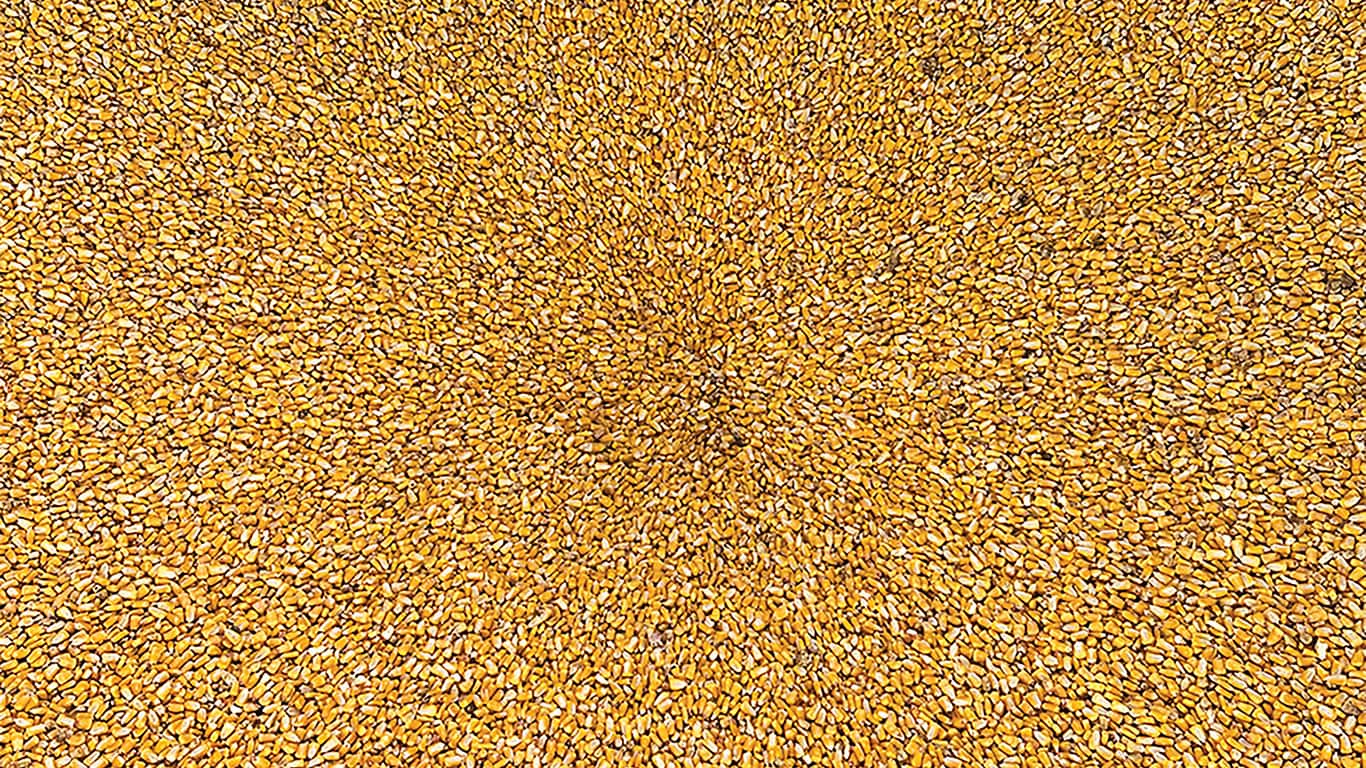
Above. David Hula has produced 623 bushels per acre, the world record in corn production. The Charles City, Virginia, farmer says timing sidedress closer to tasseling generated a 47 bushel-per-acre yield bump.
Cool it. Corn is a tropical plant, but it needs time to cool off, Hula says. Nighttime temperatures above 74 degrees have a negative impact on corn yield, because plants continue to respire, and sugars produced by photosynthesis during the day are lost, unable to fill developing kernels.
Farmers can't do much about ambient temperatures, but there are a few ways to manipulate fields to cool off as much as possible. Adequate potassium fertilizer improves corn's ability to withstand high-temperature stress by helping stomata open and close, which affects the plant's exchange of water and gases.
Fungicide application at R1 can also help the plant cool off. Convince your applicator that you want to be the first fungicide application of the day, when the stomates are still open.
"There is nothing better than the first load of the day. When the crop begins to warm up, let the spray pilot go somewhere else," Hula says.
It's been 23 years since Hula won his first NCGA yield contest with a 322 bushel-per-acre entry. He's tested all kinds of practices since, and many have worked: strip tillage, fertigation, and fanatical attention to detail on planter upkeep.
But an optimistic outlook and good humour also are important.
"There's three things that give you high-yielding corn," he says with a grin. "The good Lord, good seed, and green paint." ‡
More articles related to:
Read More of The Furrow

SPECIALTY/NICHE
Butter Tart Trail
On the road for Canada's classic baked treat.
AGRICULTURE, SPECIALTY/NICHE
Cultivating Creativity
This little farm cultivates art, not crops