 A John Deere Publication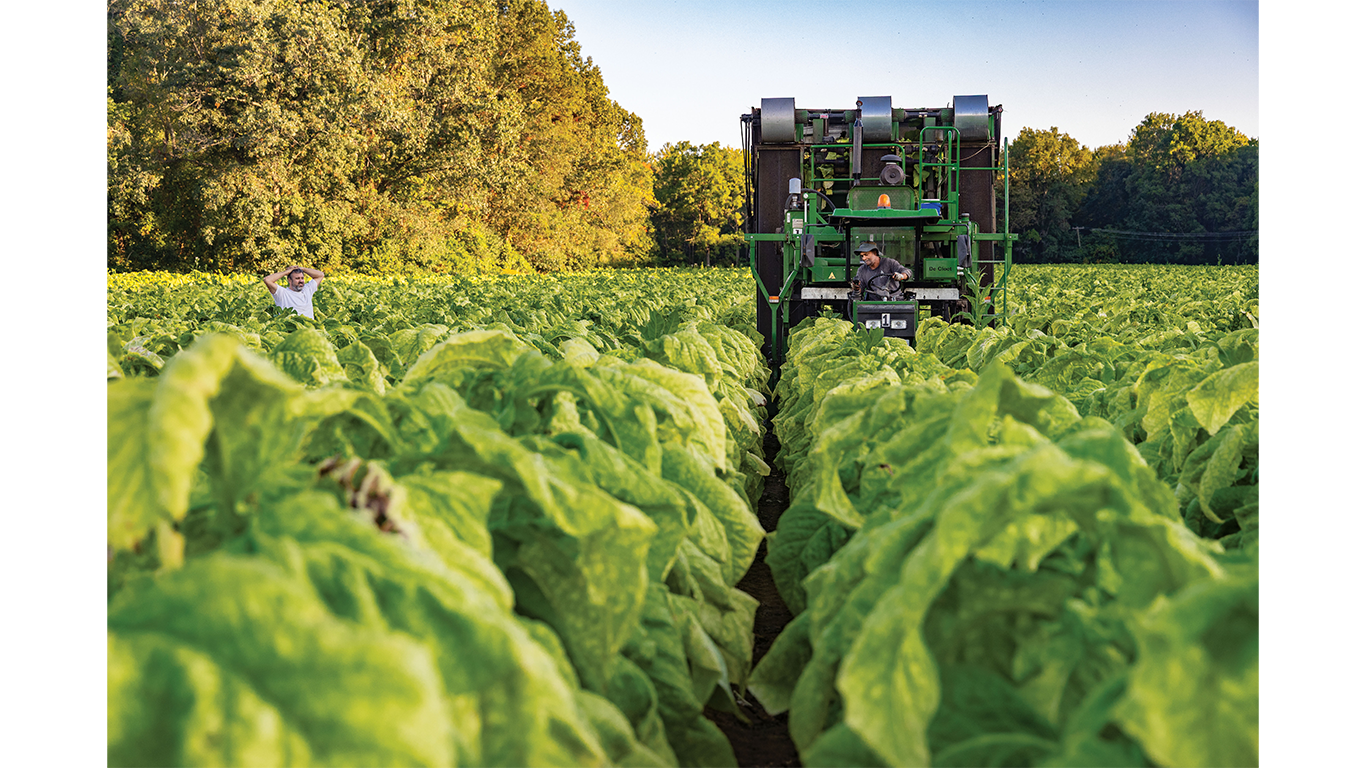
A tobacco harvester is making the last pass through a field of tobacco at DeCarolis Farming Corporation near Simcoe, Ontario. Acre for acre, tobacco is again one of the most profitable crops grown in the province.
Agriculture, Education September 01, 2026
We're Still Here
Ontario's tobacco farmers are thriving again.
Story and Photos by Lorne McClinton
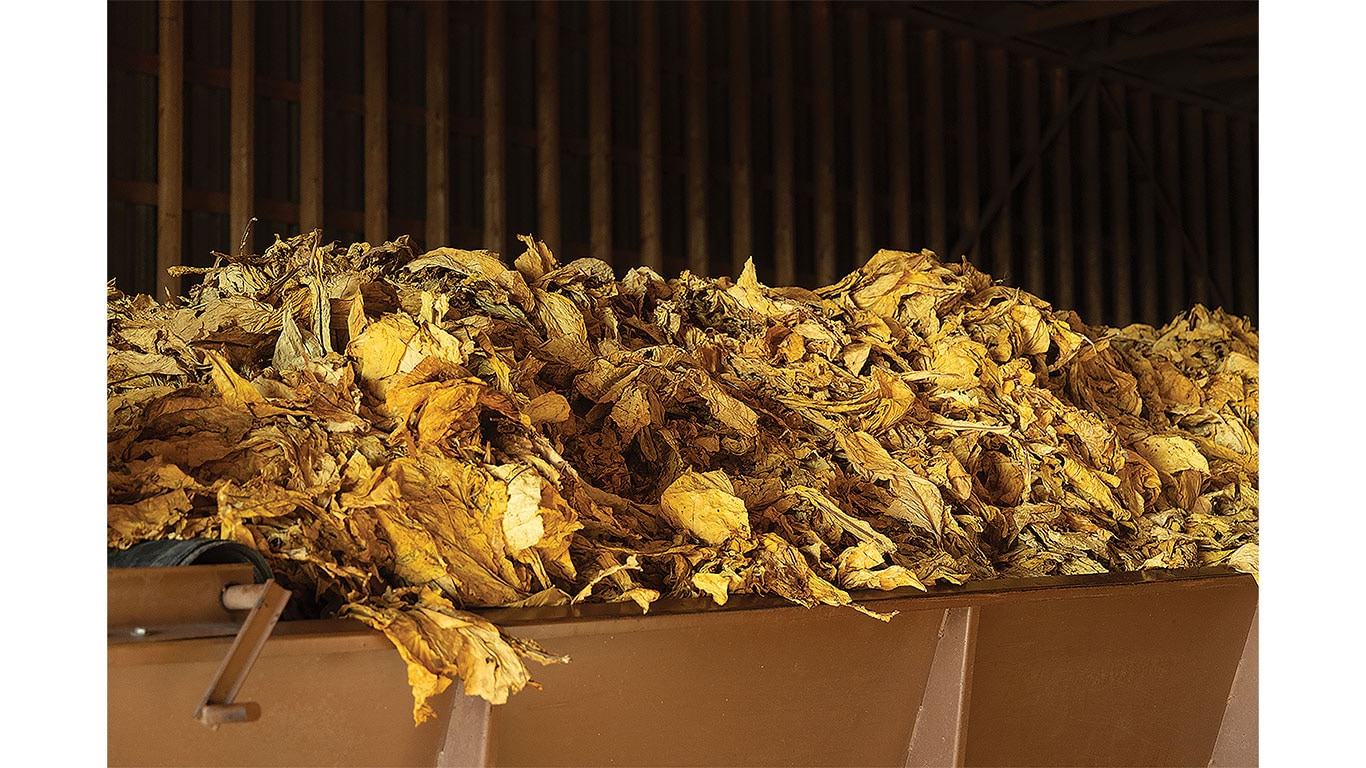
The air in DeCarolis Farming Corporation's barn-like structure that houses their strip room smells just like a freshly opened package of cigarettes. Workers are sorting through the freshly cured and rehumidified tobacco leaves to remove any burnt or green leaves and any undesirable material before compressing it into 700-pound bales and shipping it to contracted buyers.
Another tobacco harvest is underway in Canada. Typically, Anthony and Milano DeCarolis start harvesting tobacco at their fourth-generation Simcoe, Ontario, farm in early August and it continues for about six weeks. It's a highly mechanized process today. The grueling hand work that achieved notoriety in Canada through Stompin Tom Connors' song, "Tillsonburg" (it can be found on YouTube) is a thing of the past.
Today leaves are mechanically picked from the bottom of the plant upward in several passes. They're then loaded onto narrow trailers called "boats" and taken from the field to a machine called an even loader, which loads it into large metal bins. The bins go into a tobacco kiln where the leaves are carefully dried (cured) for about 10 days until they reach a golden-brown color. Once cured, the leaves are rehumidified overnight with steam so they can be handled without crumbling. And then it's off to the strip room.
If Canadian agriculture handed out comeback awards, Ontario's tobacco farmers would deserve serious consideration. Two decades ago, the sector stood on the brink of disaster. Anti-smoking campaigns had been very effective and regulatory changes driven by health concerns had collapsed demand for tobacco. More than 41% of Canadian adults smoked in 1980, just 12% did in 2024.
"Ontario went from producing over 200 million pounds in the late 1970s to 45 million pounds today," says Anthony DeCarolis, who also serves as chairman of the Ontario Flue-Cured Tobacco Growers Marketing Board. "The number of tobacco growers dropped from over 2,000 quota holders when supply management ended with a quota buyout in 2008, to just 138 now."
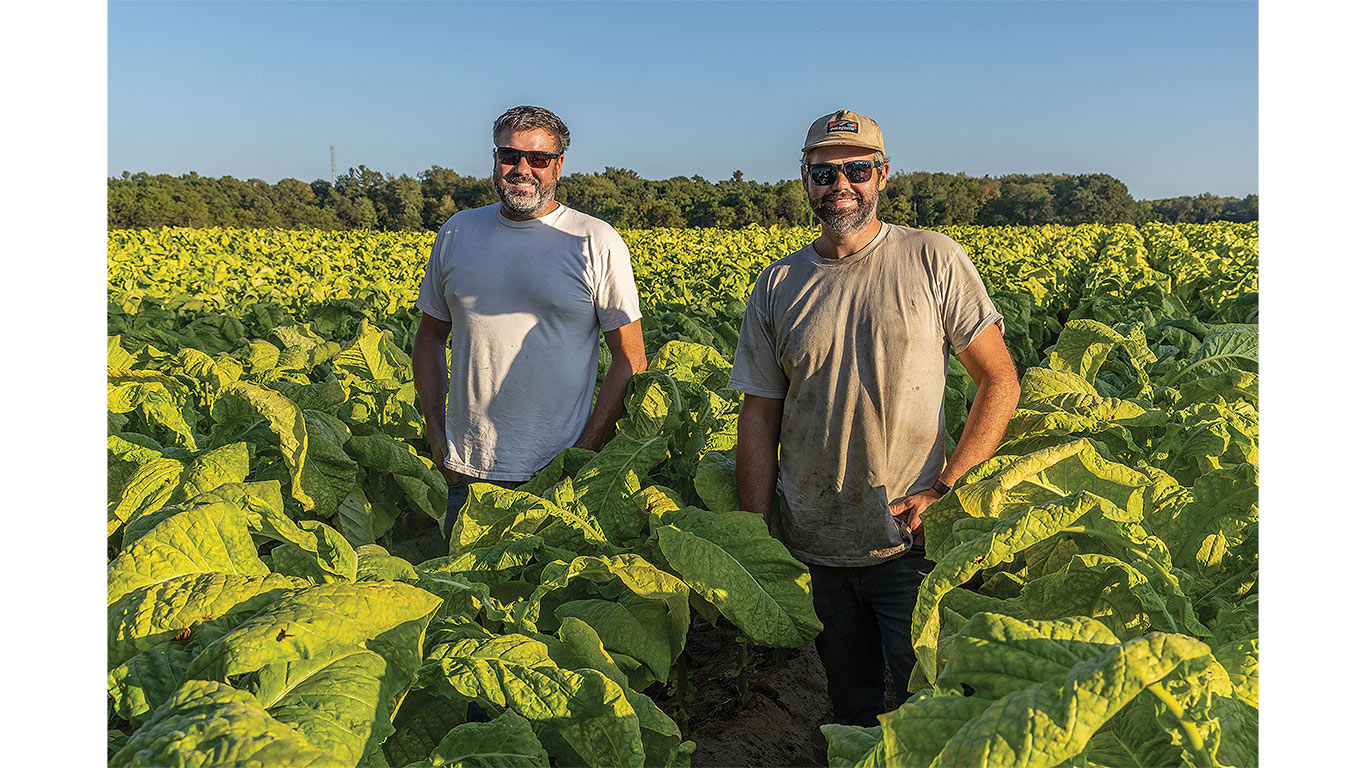
Above. Ontario tobacco farmers Anthony and Milano DeCarolis are survivors. There were over 2,000 growers when supply management ended in 2008, just 138 are left. But those left are larger, leaner, and more profitable than ever.
Thriving today. Despite the sector's near-death experience back then, Ontario's surviving tobacco growers are thriving today. They're larger, leaner, and more profitable than ever.
"I'm tempted to say the tobacco growers who are still around survived through stubbornness," DeCarolis says. "They just didn't want to give up. They were also large enough, and efficient enough, that they were able to survive on slimmer margins."
Anyone driving through the province's tobacco belt can see how profitable the crop once was. Every farmyard reflects the affluence it once generated. DeCarolis says that back in his grandfather's and great grandfather's time a tobacco grower could generate a living growing just 15 acres. A farm could pay for itself in as little as four years.
"But land wasn't $21,000 an acre back then either," DeCarolis says. "Now land and all the specialized equipment and infrastructure is so expensive that you need to have a critical mass for it to make sense. All the guys who cruised by growing 40 acres of tobacco are gone. Growing 100 acres today would just barely be enough to cover the mortgage payments."
There are almost no new tobacco farmers, most have legacy operations. DeCarolis jokes that if you have the money to get into it you should probably just retire.
Years of anti-smoking campaigns have created a stigma around tobacco. Growers are sometimes treated as the pariahs of Canadian agriculture.
"But hey, we're still here," DeCarolis says. "Most of our production is exported these days, it mainly goes to China. After years of stagnation, tobacco is once more a very lucrative crop. It's not like it used to be, but I would say acre for acre, tobacco is still one of the most profitable crops grown in southern Ontario." ‡
More articles related to:
Read More of The Furrow
AGRICULTURE, EDUCATION
An Unlikely Delicacy
Ecuador's most expensive–and sought-after–meat is the humble guinea pig.

AGRICULTURE. FARM OPERATION
Under Wraps
Shrink wrapping large farm equipment for off-season storage.