 A John Deere Publication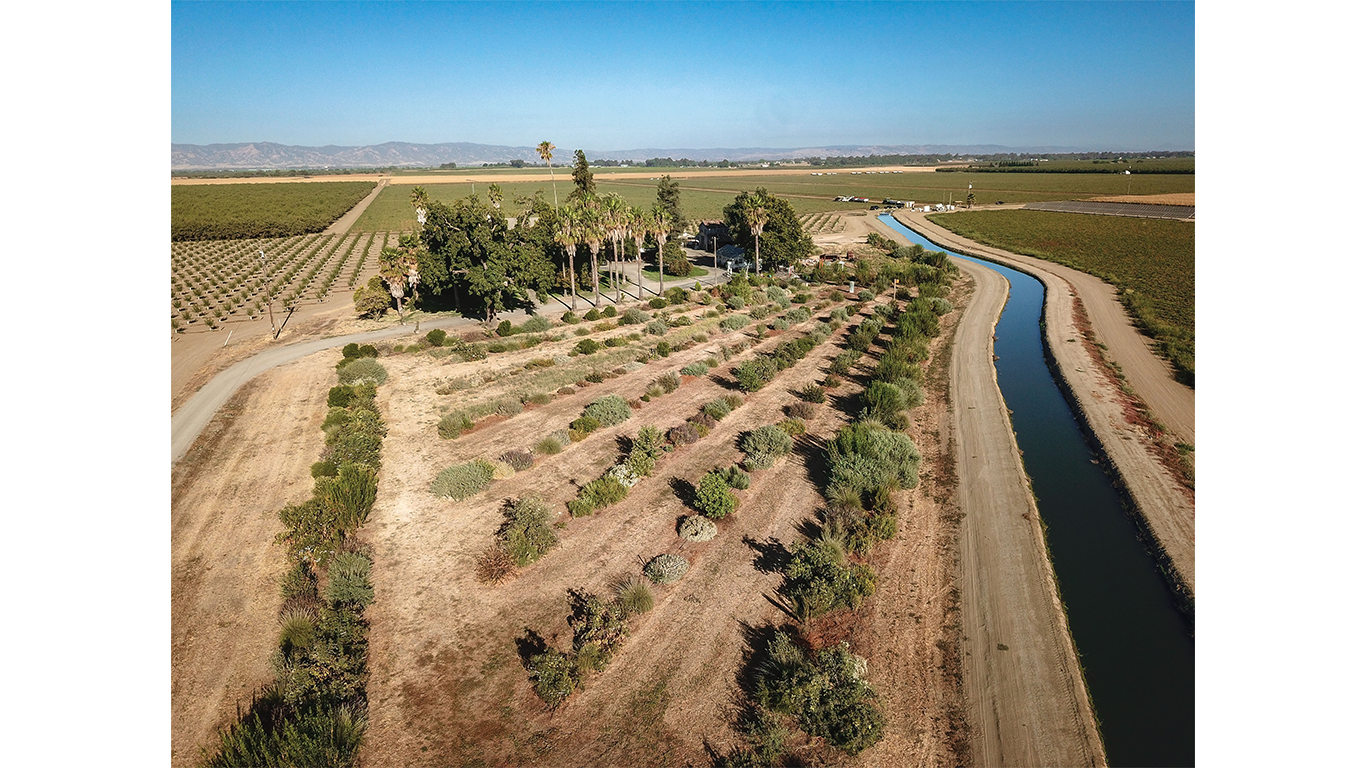
Bullseye Farms replaced an underproducing block of walnuts with a hedgerow planting.
Agriculture, Farm Operation September 01, 2026
Bustling Hedgerows
Beauty, beneficials, and biodiversity boom in hedgerows.
Story and Photos by Steve Werblow
If there's a bustle in your hedgerow, don't be alarmed. It could be wildlife enjoying the habitat you're providing, or a breeze shuffling the leaves as the hedge protects sensitive crops from wind damage. Maybe it's one of a wide range of pollinators or other beneficial insects sipping nectar from flowering shrubs. Or it might just be your footsteps as you enjoy a vibrant ecosystem along a field's edge.
Farmers have a wide range of motivations for planting diverse strips of trees, shrubs, and ground vegetation in dense hedges. But those who do tend to see just as wide a range of benefits.
Sustainability. Bullseye Farms is a large, family-owned farm that produces almonds, walnuts, pistachios, tomatoes, corn, wheat, alfalfa and more around Woodland, California, roughly in the center of the Central Valley. Committing acres of world-class farmland to hedgerows is part of Bullseye's commitment to sustainability, says Danielle Sanchez, one of the operation's farm managers. Sanchez is responsible for Bullseye Farms' row crop and orchard pesticide program as well as its sustainability effort.
Sanchez has noticed that hedgerows catch countless tumbleweeds, keeping Russian thistles from bouncing through the fields and spreading their seed.
By selecting native plants that flower over the entire season, Sanchez can also use hedgerows to boost local pollinators. That's great for bee-pollinated crops like almonds and sunflowers, and an important step toward earning eco-labels like Bee Better Certified. And buyers are starting to ask about hedgerows.
"A lot of the companies we sell to are really interested in these projects implementing hedgerows," Sanchez says. "That's one of the things they always ask about in terms of sustainability. So they like to see this, too."
Consumer benefits of hedgerows can be even more direct.
"Along a roadway or something like that, the hedgerows are nice because they create a natural fenceline, a barrier," says Sanchez. "If there's a tree crop and we're doing air blast spraying in there, I like the buffer. We have a lot of bike riders and walkers, and I like that protection it provides."
Those benefits don't cost much.
"The biggest cost is the initial planting, which includes ground prep, plants, irrigation, mulch, and labor," Sanchez says. "After the hedgerow is established, it does not require too much upkeep. We mow 3 to 4 times a year to keep weeds from going to seed, occasionally hoe weeds in the plant row, and irrigate minimally."
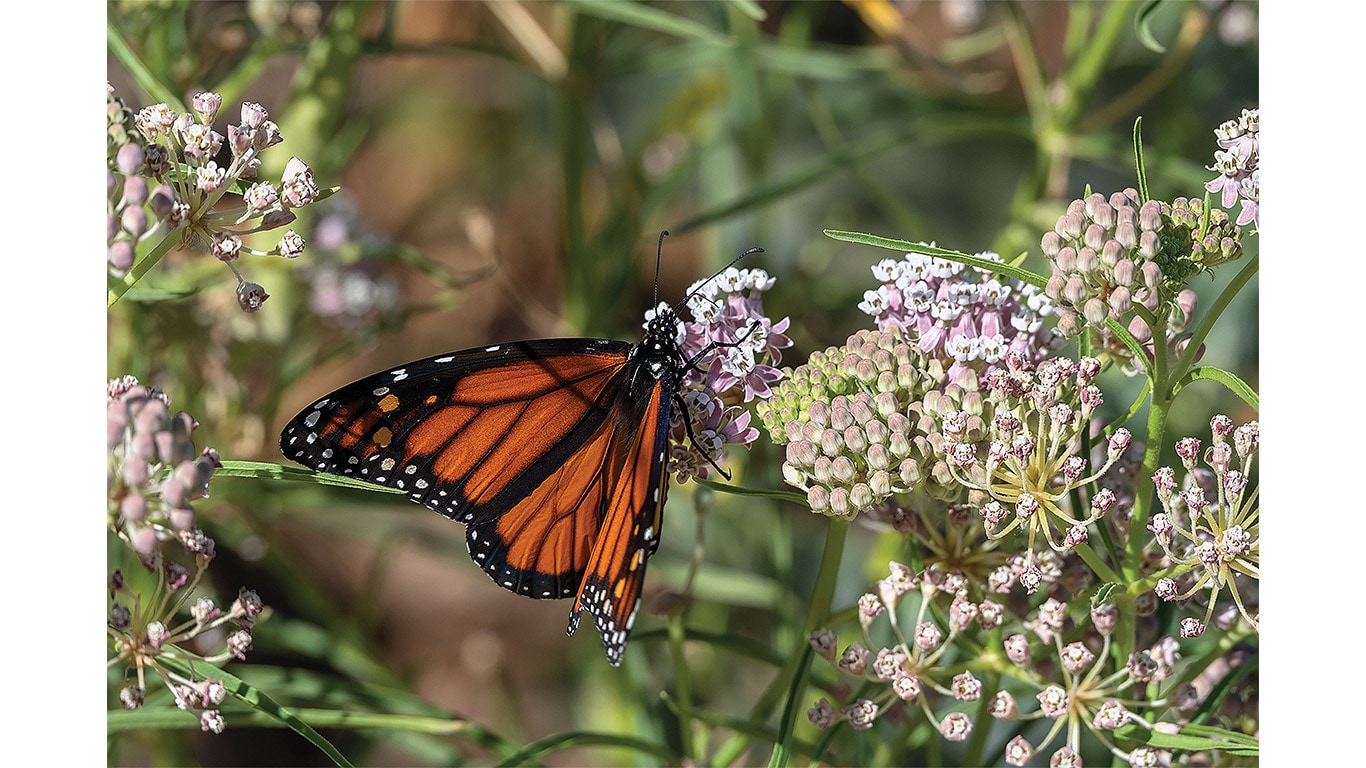
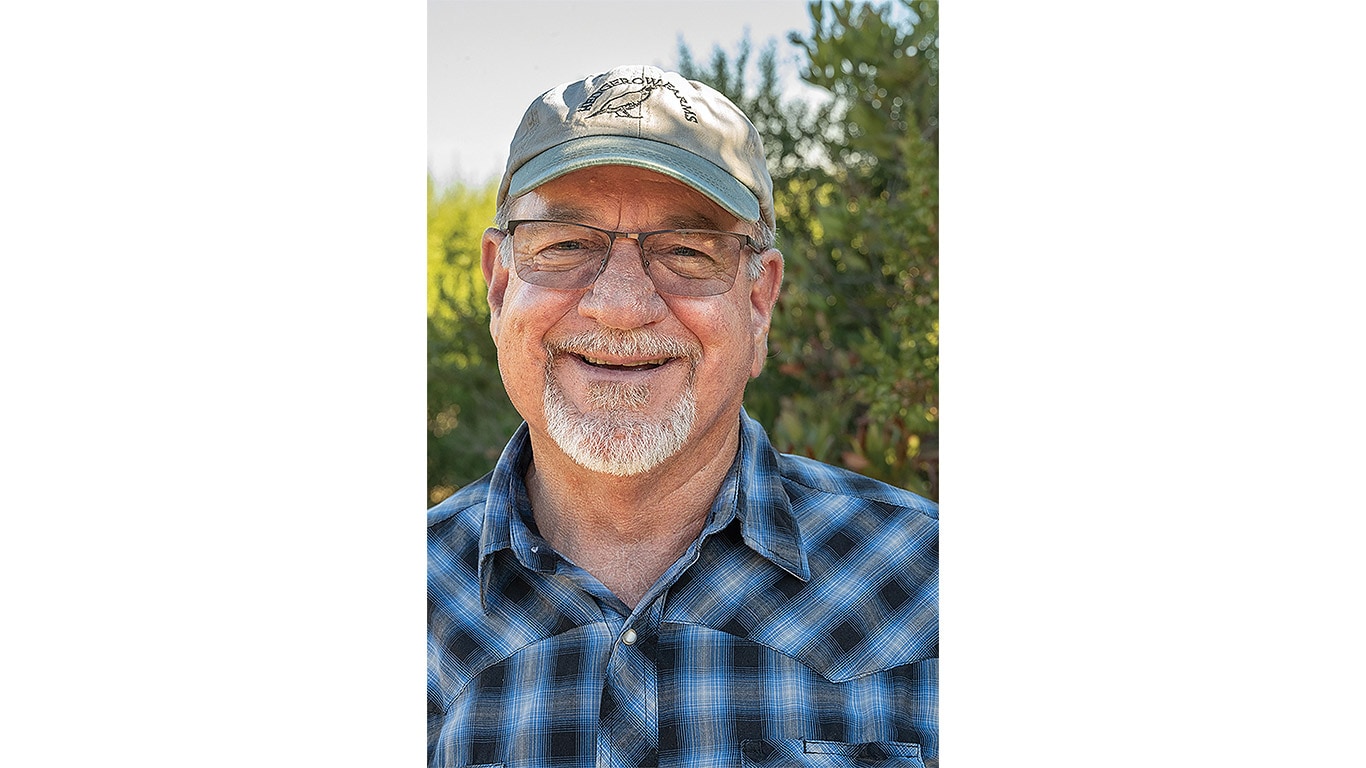
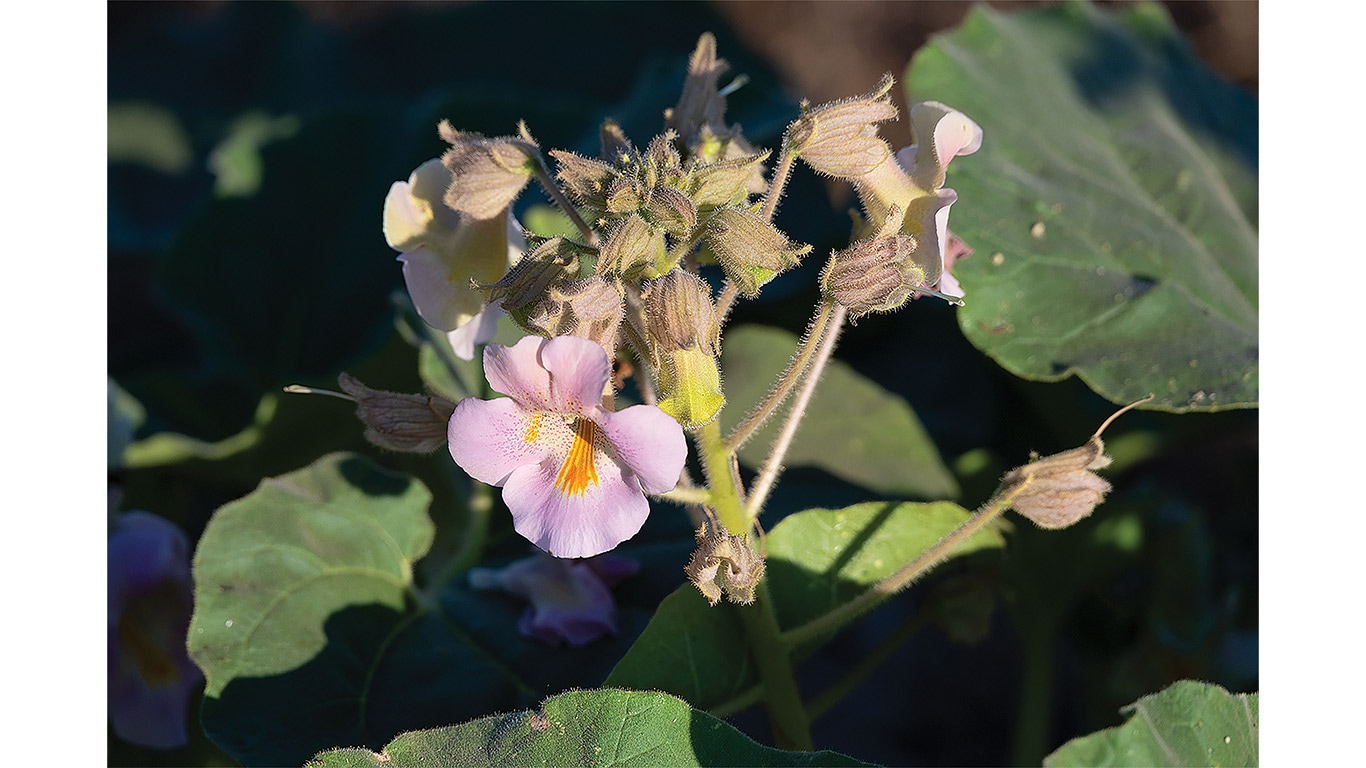
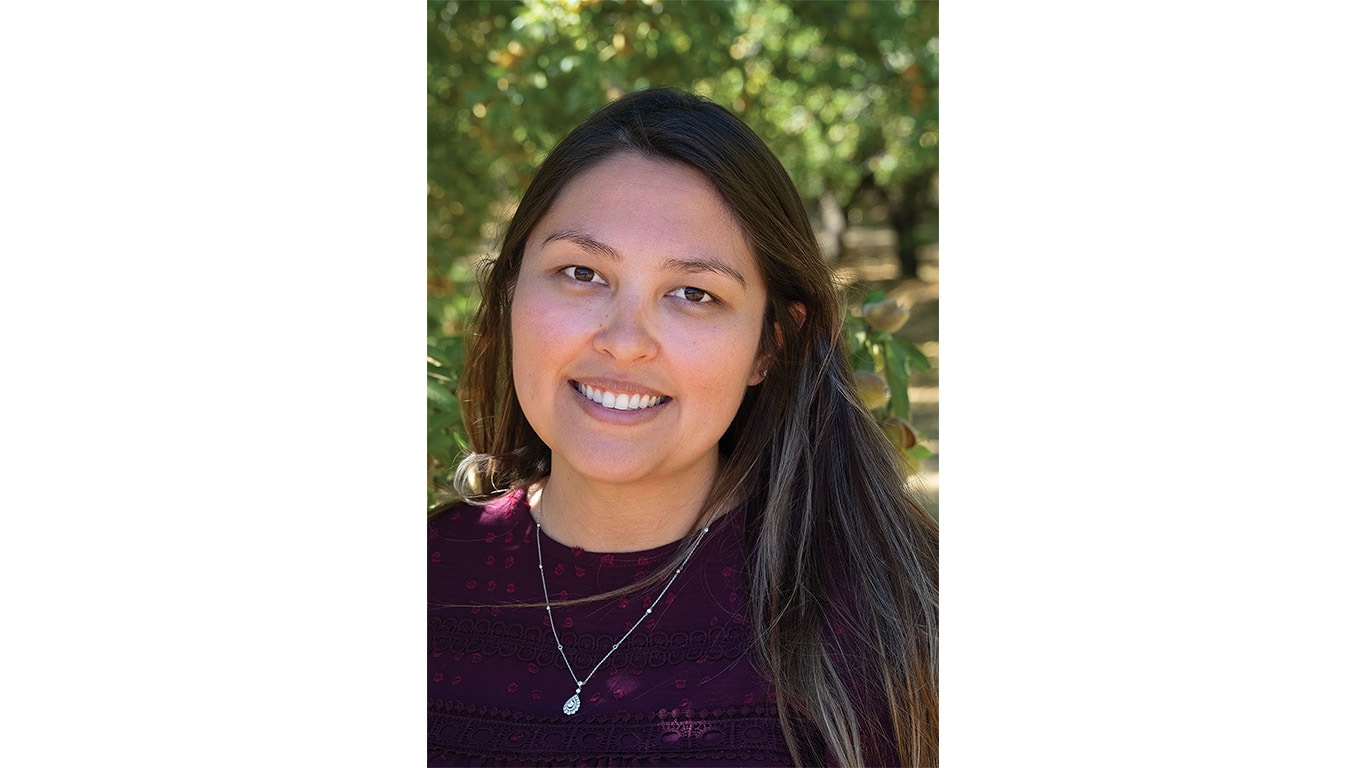
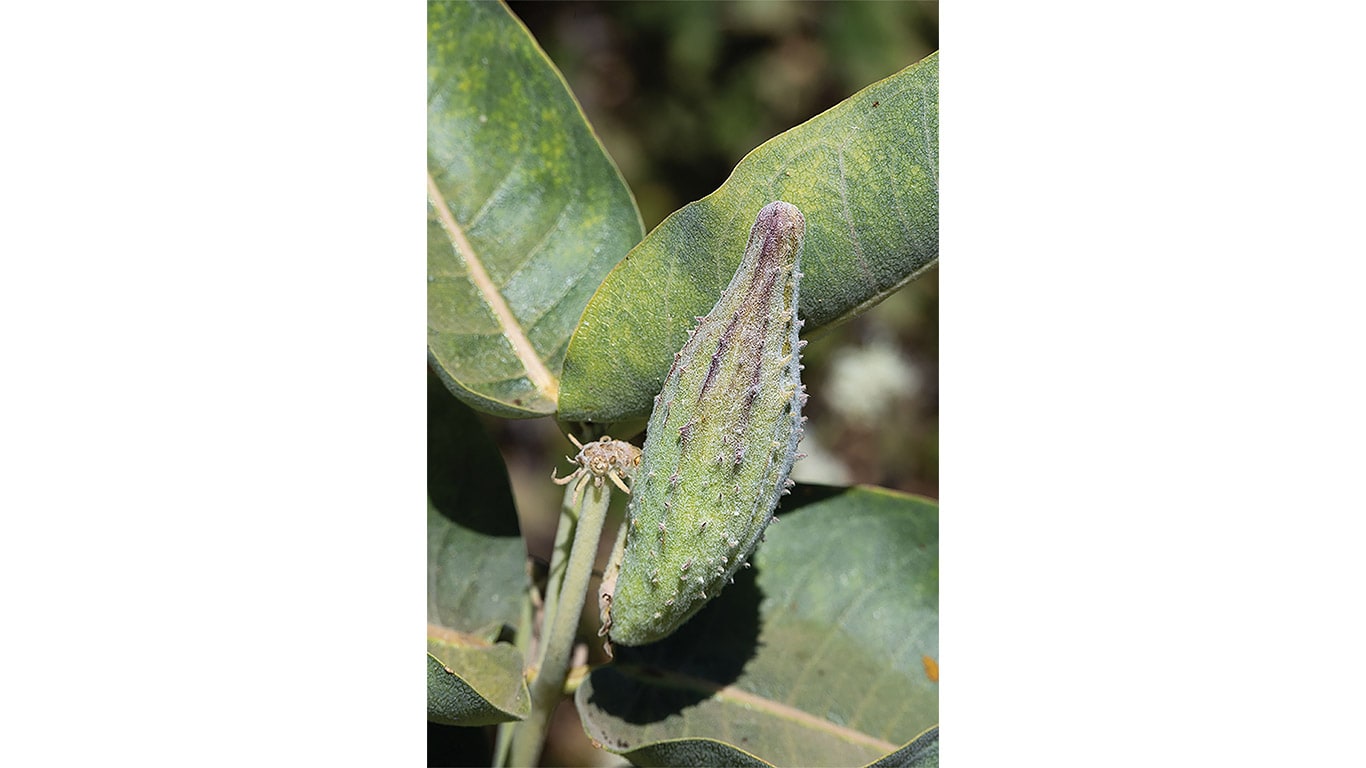
Above. Hedgerows can provide habitat for many beneficial insects. Jim Mast notes that hedgerows need a little early coddling. These unicorn plant (or devil's claw) flowers will produce horn-shaped seed pods. Danielle Sanchez of Bullseye Farms says buyers are very interested in the operation's hedgerows. Milkweed nurtures Monarch butterflies.
Plant plan. Hedgerows require some planning. Bullseye Farms worked with the Xerces Society for Invertebrate Conservation to plant a pollinator hedgerow. Xerces biologists provided a list of native species that could work on the site. Sanchez and her team checked it carefully, eliminating wild sunflowers from their plan to avoid interfering with the surrounding area's commercial sunflower seed production.
There are plenty more options, of course. Jim Mast, a retired farmer in Zamora, California, who has also worked in resource reclamation, ecosystem restoration, and native plant propagation, likes to start with cottonwood and willow in many hedgerows. (Stick to male cottonwoods, he suggests—they don't produce the droves of fluffy seed that can make the trees messy.)
"For wildlife, you want a multitude of different plants," he says. "Creeping wild rye makes good cover, then you have bigger shrubs like toyon—the birds like those—and coyote bush, buckeyes, mulefat, wild rose, Cercocarpus, Western redbud..."
Site prep for a hedgerow can involve ripping compacted areas or scalping weedy strips. Mast has used mattock-like picks, hoes, and soil probes to dig planting holes. Somebody he worked with at Wildlands Incorporated even built a planter that loosened hard soils by pumping water into a probe.
Weed control is vital to giving hedgerows a fighting start. Mast has used geotextile mats; Sanchez spreads crushed almond shell mulch to keep weeds down.
Water is also crucial. Though native, new hedgerow plantings need some coddling.
"One of the misnomers I know I fell for when I first started trying to plant some native plants around our house was, 'They're native, they'll just take on,'" Mast confesses. "I did not care for them the way they probably should have been cared for in the beginning. They need water and making sure you keep control of the weeds with herbicide or by hand.
"When I was working up north [on big restoration projects in eastern Washington and Oregon], we had these little plastic tubes, maybe 16 inches tall, with little holes in the bottom, and we'd put them right next to the plants," he says. "We had these bladder backpacks, like firefighters, and we'd fill the tubes with water, giving them a little bit of water to keep them going through the season."
On a warm summer afternoon, Mast walks through a hedgerow he helped David and Rachael Long establish on their farm near Winters, California.
"You see quail coming back into the area," he says. "There's a lot of different birds, quite a few turkeys, a lot of different hawks. We've got the wildlife here, and it's kind of neat to see it." ‡
More articles related to:
Read More of The Furrow
AGRICULTURE, SPECIALTY/NICHE
Cultivating Creativity
This little farm cultivates art, not crops
AGRICULTURE, EDUCATION
Conjuring an Oasis
Water strategy coaxes life from the desert.