 A John Deere Publication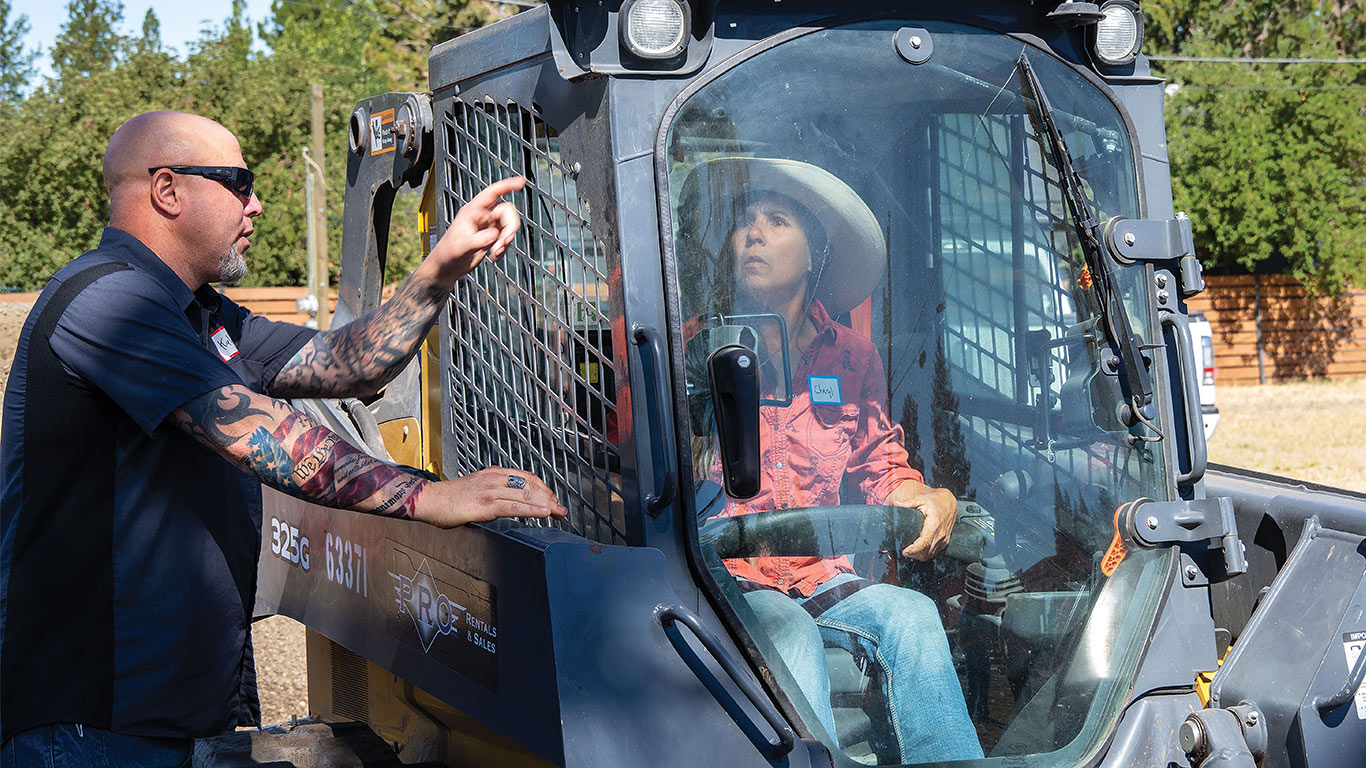
School of Ranch instructor Kaleb Watson offers pointers to Cheryl Hollabaugh during a road building class.
Agriculture, Education September 01, 2026
Homesteading 101
School of Ranch helps homesteaders learn new skills.
Story and Photos by Steve Werblow
Former teacher and educational software designer Mark Gross wanted to cut some junipers on his new high desert homestead near Terrebone, Oregon. That's when reality hit. Hard.
"I bought a chainsaw and came home and watched a YouTube video," Gross recalls. "And it was like, 'I'm going to kill myself.' So I ran an ad on Craigslist: 'This idiot needs help with a chainsaw.'"
Kaleb Watson—former logger and military firearms instructor and lifelong heavy equipment operator—answered the call. Gross learned how to run a chainsaw, and he made Watson the first instructor in the School of Ranch he launched in 2022 for new homesteaders like himself.
"We teach newcomers—and curious locals—the skills necessary to live here," says Gross. "We help entrepreneurs build their businesses by building community around them. And, finally, we help people discover common ground regardless of politics, age, background, beliefs. Because when you get together and you overcome something together, you build those bonds."
Popular. Steve Challis and Julia Vasinda quickly became School of Ranch students when they bought 80 acres near Sisters, Oregon. Vasinda started with the hugely popular Power Saws for Fearless Women class, and the couple teamed up in courses on welding, beekeeping, chickens, and pasture soils. Challis lent the school his new skid steer for a road building class and stayed for the 4-hour, hands-on workshop.
"I've been building my driveway, but I'm sure there's more I can learn," Challis says. "And I love to hang out with people who are doing the same thing. Maybe there's some connection I can make. I can't think of a better way to spend a Saturday, to be honest."
Another participant in the road building class was Heidi Maricle of Redmond, Oregon. She took her first School of Ranch class after starting her farm services business, You Need A Farm Girl.
"I was like, 'I want to meet some more people, I want to get some more community,'" Maricle says after some practice feathering out a bucketful of gravel in the skid steer. "And I love to learn new skills. Then, as I started my business, it became a fantastic networking opportunity. I've gotten a ton of clients from School of Ranch, and it's just been great networking both ways."
Now she also leads tractor driving and rug weaving workshops for School of Ranch.
Gross, with the help of more than 2 dozen "guest stars" like Maricle and artificial intelligence tools, designs courses to engage people with all levels of knowledge and all sorts of learning styles. The key is getting hands-on, whether it's driving a skid steer, weaving baskets, or peering into a dissected horse's leg to better understand equine anatomy.
Gross says 60 to 70% of the students are women, and the return rate is high—the typical School of Ranch participant takes 3 classes.
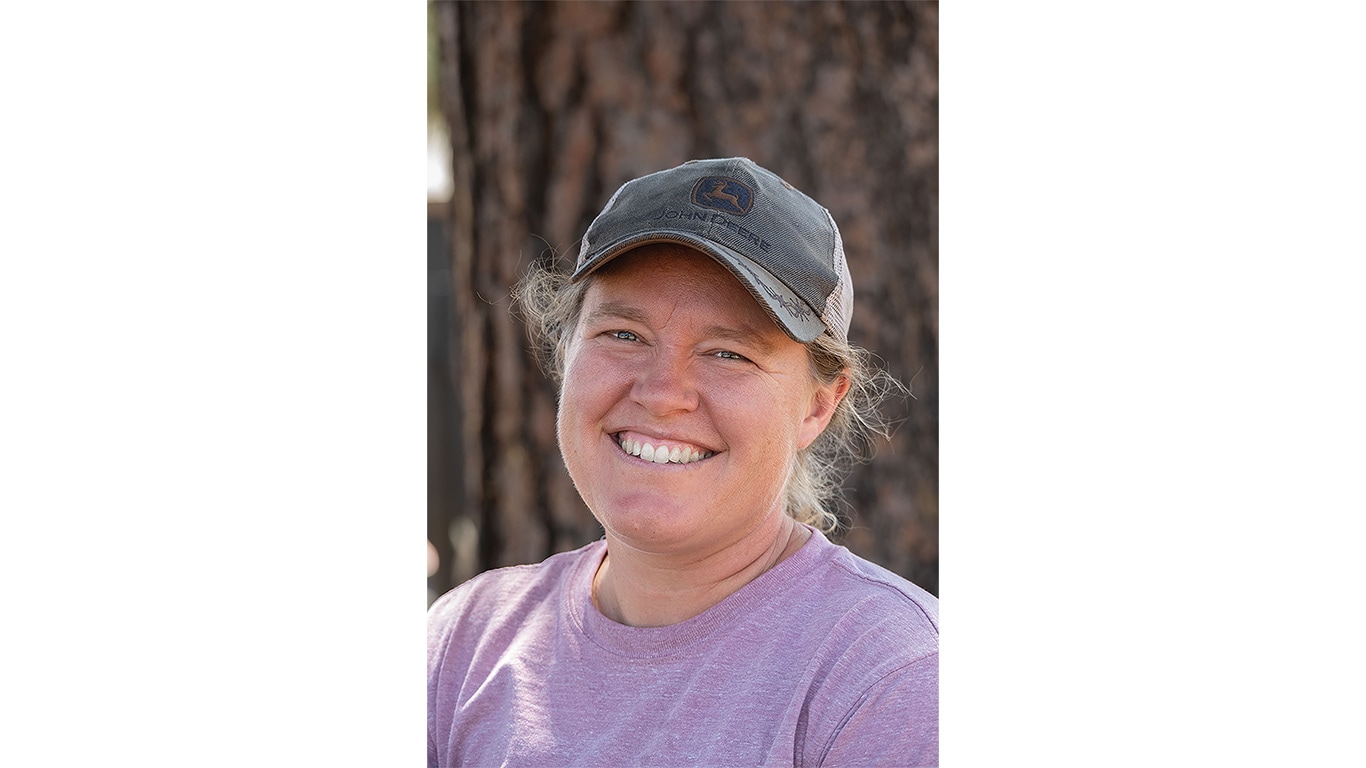
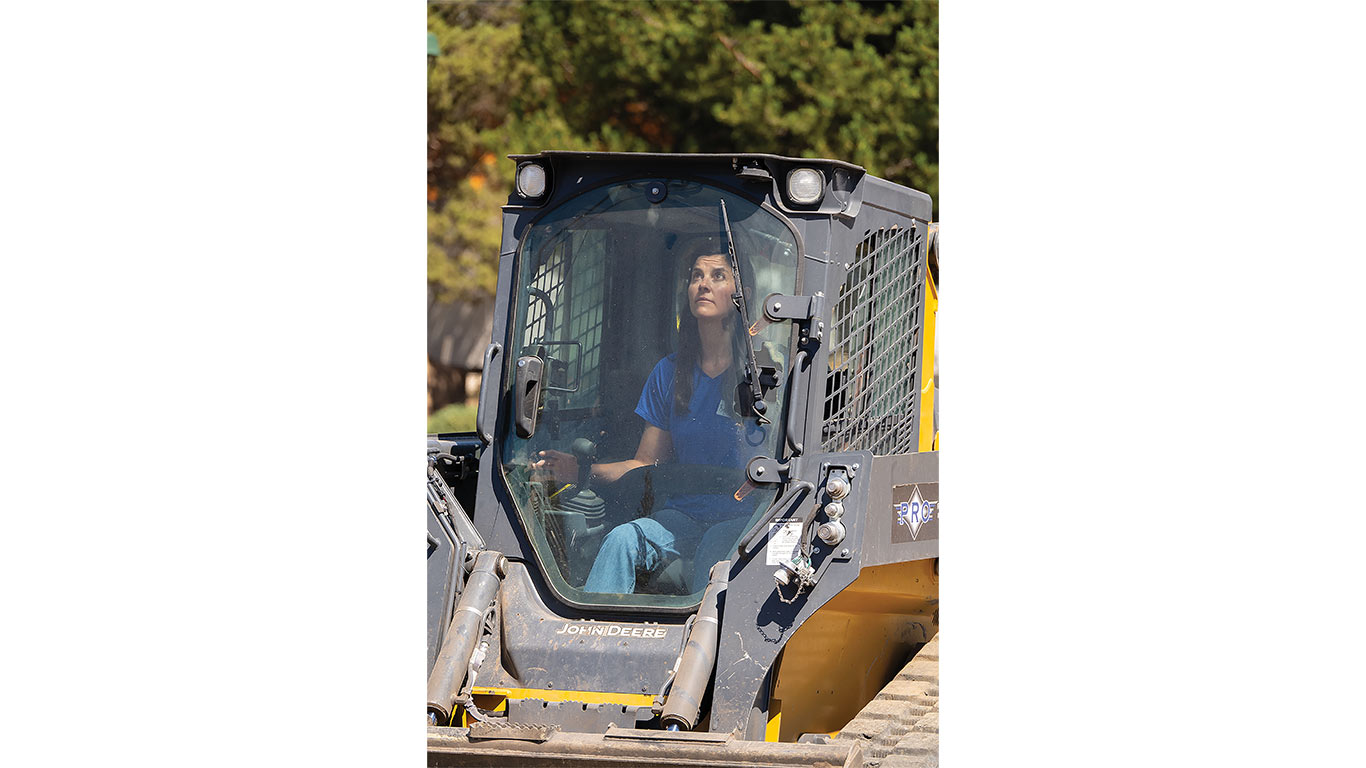
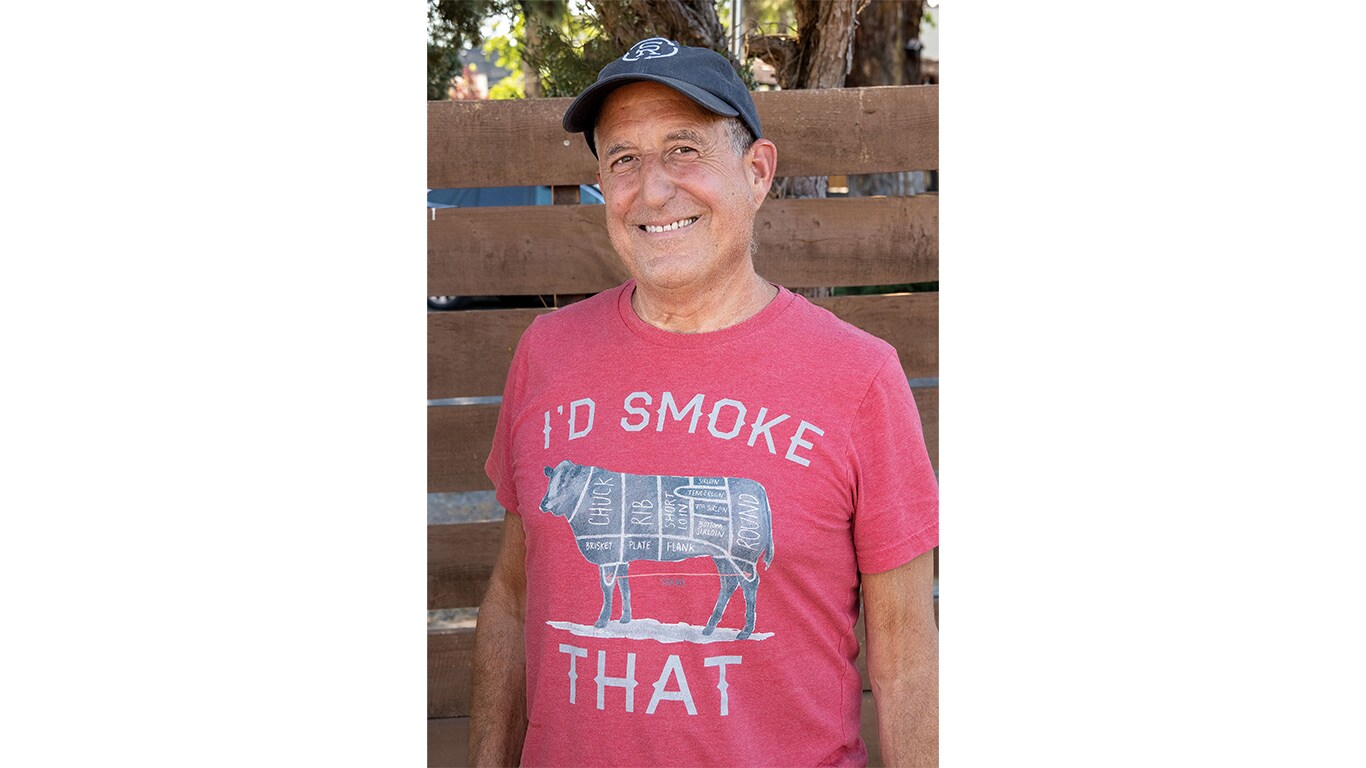
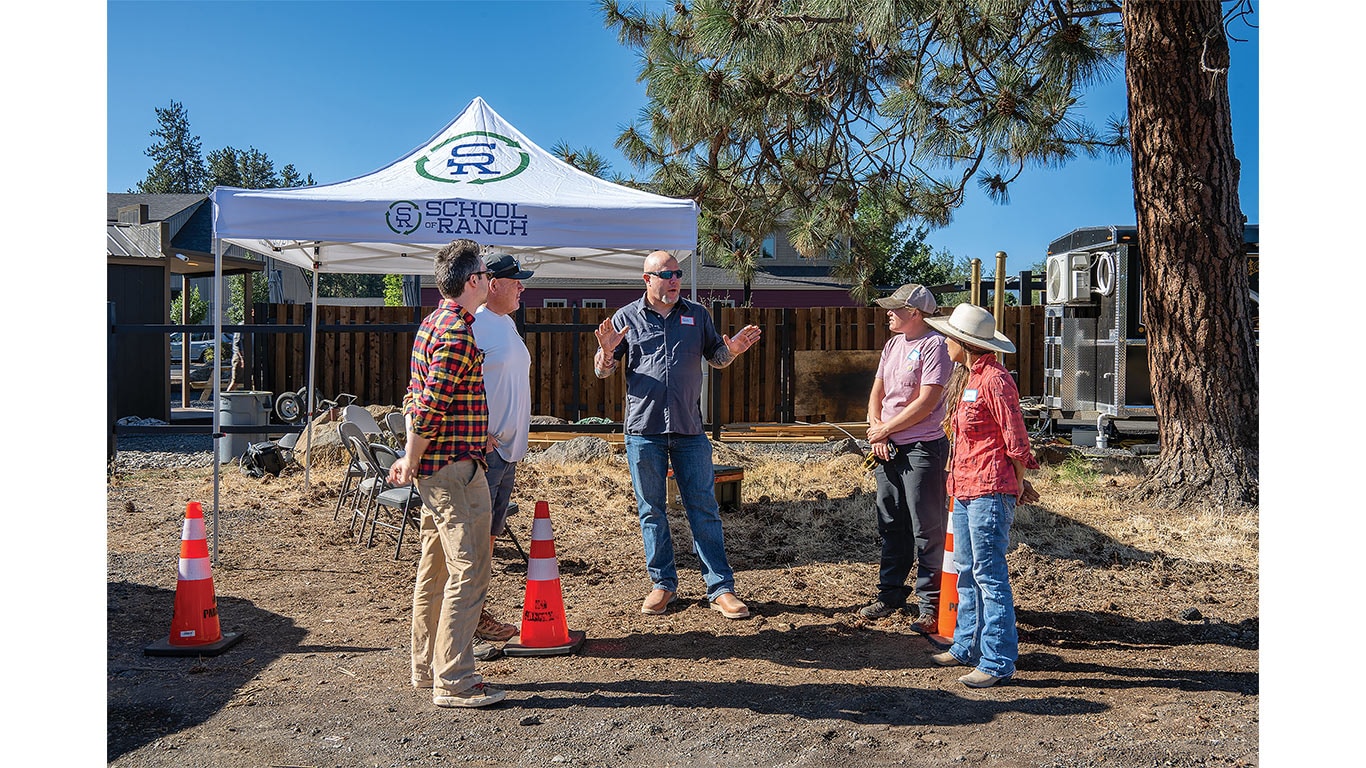
Above. Heidi Maricle is a School of Ranch student and instructor. Brianne Kothari practices her skid steer moves. Retired teacher and software developer Mark Gross created School of Ranch for new homesteaders like himself. A former military firearms instructor, Watson emphasizes hands-on experience in his School of Ranch teaching. "It just gets them to turn their creativity loose and share their drive to push forward for themselves," he points out.
New classes. Creating a new class can start with a teacher proposing an idea, or a student asking for a class on a particular skill. When Maricle mentioned that one of her hobbies is five-strand rug braiding, she and instructor Elaine Cole developed a curriculum and gathered names of interested students. When 10 students preregistered, Gross sent around an online poll to schedule a time for the program that worked for all the participants.
"We only run workshops as frequently as people want them, and we only run the ones that people want," Gross explains.
Some School of Ranch alumni will come away with a new hobby or a skill they will apply on their own homestead, notes Watson. Others might use their training to guide them toward buying the proper machine or tool. Still others may not put their skills to work directly, but will be able to understand what's happening when something breaks so they can make a more informed call to a repair expert, he adds.
However participants choose to use what they learn at School of Ranch, Gross aims for delight.
"They're showing up because we delight them," he says. "We find ways to give them a voice so they can share their lived experience and their passion with people they don't know, who are in the same boat in the same room. And we show them ideas they would never expect from the technology or the techniques."
Watson says he never tires of watching students learn new skills.
"I don't care who you are, how good you've done in life—knowing that you learned a skill and that you can do something yourself is going to make you feel good," Watson says. ‡
More articles related to:
Read More of The Furrow
AGRICULTURE, EDUCATION
An Unlikely Delicacy
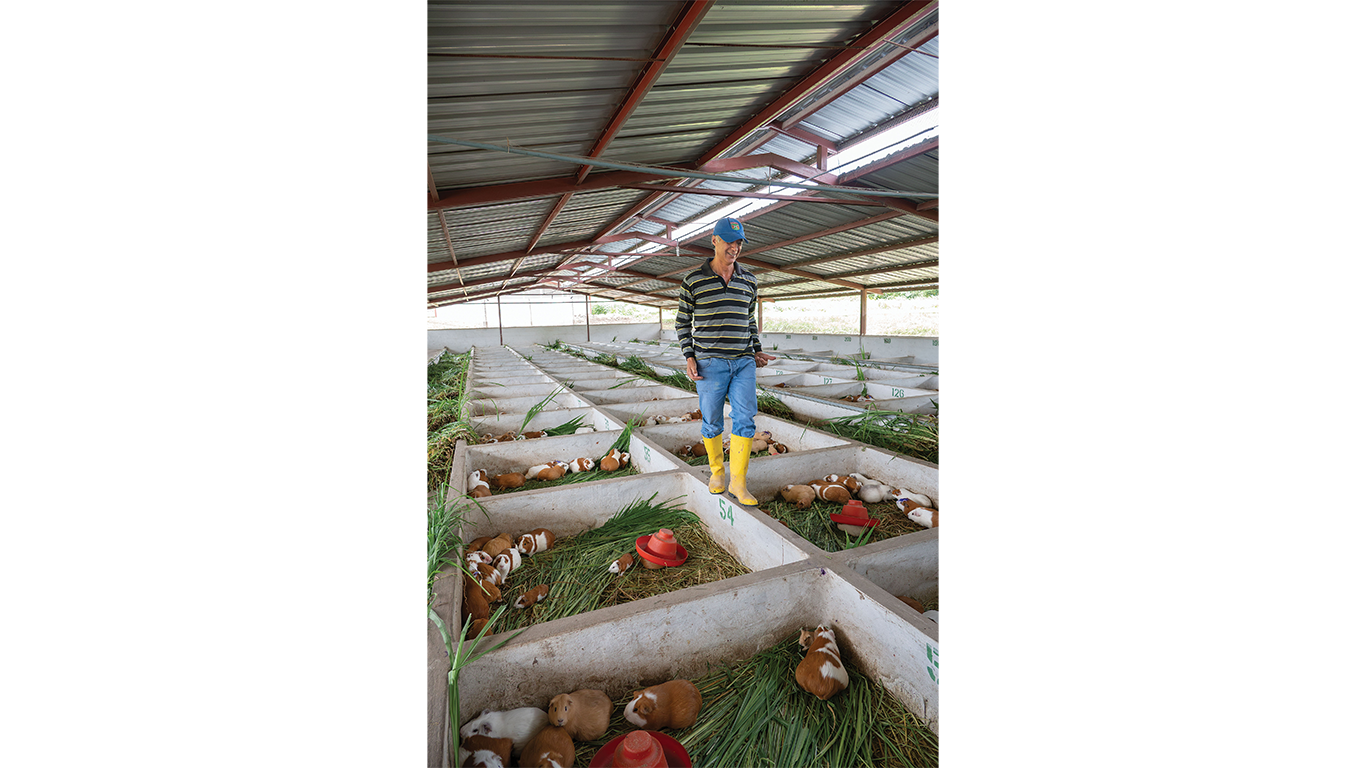
Ecuador's most expensive–and sought-after–meat is the humble guinea pig.